Codeine vs Fentanyl: Clinical Comparison, Potency & Side Effects

Codeine and Fentanyl represent the absolute opposite ends of the American pharmacological spectrum within the opioid class of medications. While Codeine is a mild, naturally occurring opiate often utilized for minor dental procedures or cough suppression, Fentanyl is an ultra-potent synthetic behemoth reserved strictly for the most catastrophic pain scenarios, advanced cancer cases, or surgical anesthesia. In the United States, the potency gap between these two substances is nearly 1,000 to 1 on a milligram-for-milligram basis.
In the USA, because of this extreme potency, Fentanyl is never considered a starting point for pain management. This 800+ word guide explores the vast pharmacological distance between these two narcotics, the specific risks of rapid-onset synthetic opioids, and why pharmaceutical-grade Fentanyl requires the highest level of DEA oversight and clinical monitoring in the American healthcare system. We will also detail the 'genetic lottery' that makes Codeine increasingly unreliable in U.S. emergency rooms compared to the direct, predictable action of Fentanyl.

Dr. Kelsey Hopkins, MD
Dr. Hopkins practices rural family medicine in Southern Illinois, with a focus on community healthcare and chronic pain management.
Quick Reference Comparison
| Clinical Feature | Codeine | Fentanyl |
|---|---|---|
| Drug Class | Natural Opiate | Synthetic Opioid |
| U.S. Potency (MME) | 0.15 (Low) | 50 - 100+ (Extreme) |
| Mechanism | Mu-Opioid (Requires Conversion) | Mu-Opioid (Direct Active) |
| DEA Schedule | Schedule III (Combo) or II | Schedule II |
| Common Brands | Tylenol #3, Tylenol #4 | Duragesic (Patch), Actiq, Fentora |
| Primary Use | Minor Pain / Cough | Severe Cancer / Surgical Pain |
What is Codeine?
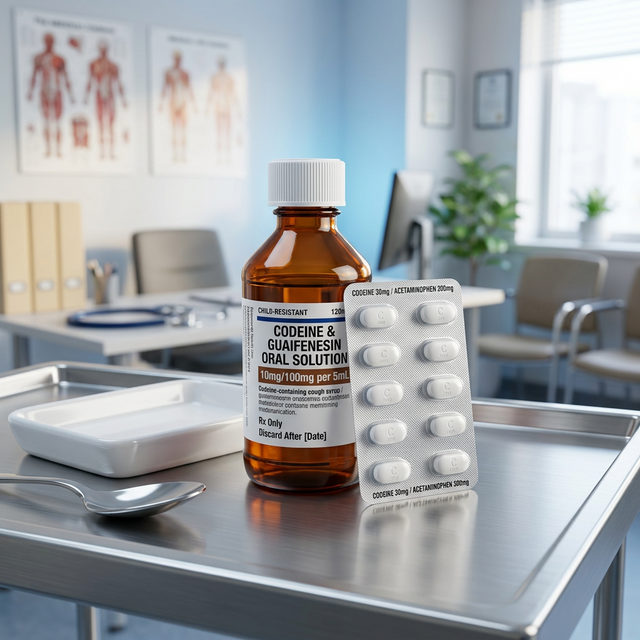
Codeine is a naturally occurring alkaloid derived directly from the opium poppy (Papaver somniferum). In the United States, it has been a staple of pain management for over a century, particularly for mild-to-moderate conditions. Most commonly, it is found in the USA as a combination product known as 'Tylenol #3' (30mg codeine) or 'Tylenol #4' (60mg codeine). Beyond pain control, Codeine is the foundational antitussive (cough suppressant) used in American prescription cough syrups.
The defining trait of Codeine is that it is a 'prodrug.' It has negligible analgesic effects on its own. After ingestion, the U.S. patient's liver must use the CYP2D6 enzyme to convert codeine into morphine. This makes it uniquely unreliable; for the roughly 10% of Americans who are 'poor metabolizers,' Codeine provides almost zero relief, whereas 'ultra-rapid' metabolizers may experience dangerous levels of morphine from a standard dose.
What is Fentanyl?

Fentanyl is a fully synthetic opioid developed in 1960 that is approximately 100 times more powerful than morphine and nearly 1,000 times more powerful than Codeine. In the United States, pharmaceutical Fentanyl is reserved exclusively for chronic, severe cancer pain in patients who have already built up a high tolerance to other narcotics (opioid-tolerant), and as a primary anesthetic in U.S. operating rooms.
Because its lethal dose is as small as 2 milligrams—roughly the size of a few grains of salt—Fentanyl is under the strictest possible DEA scrutiny in the USA. It is active directly in the brain without requiring liver conversion, making its effects extremely consistent but potentially fatal for anyone without significant prior exposure to high-dose opioids. It can be administered via skin patches (transdermal), oral lozenges (transmucosal), or intravenous (IV) injection in American hospitals.
Mechanism of Action: How They Work
The difference between these two American narcotics lies in their binding affinity and activation pathway. Codeine is an 'indirect' medication—it asks the liver to create its active ingredients. Fentanyl is 'direct' and 'ultra-affine.' It locks onto the brain's mu-opioid receptors with such intensity that it can override almost any other pain signal. In a U.S. clinical setting, this high affinity is why Fentanyl is used for 'breakthrough' pain that fails to respond to drugs like oxycodone or morphine.
Furthermore, because Fentanyl is highly lipophilic (fat-soluble), it crosses the blood-brain barrier almost instantly. In American emergency departments, this allows for rapid pain control in trauma cases but also means that life-threatening respiratory depression can occur much faster than with an oral dose of Codeine.
Biological Comparison
Potency Gap
Fentanyl is 1000x stronger than oral Codeine.
Activation
Codeine is a prodrug; Fentanyl is direct active.
Delivery
Codeine is oral; Fentanyl is IV, patch, or lozenge.
Cough Control
Codeine is a direct antitussive; Fentanyl is not.
FDA-Approved vs. Off-Label Uses
- Codeine: FDA-approved for mild-to-moderate pain and cough. Restricted in the USA for children under 12 and any patient under 18 undergoing tonsillectomy due to sudden death risks.
- Fentanyl: FDA-approved for chronic cancer pain (Duragesic) and breakthrough cancer pain (Actiq). In the USA, it is strictly NOT approved for short-term pain such as dental work or post-surgical recovery at home.
Potency and Clinical Strength
Comparing Codeine to Fentanyl is often described by U.S. toxicologists as comparing a firecracker to a nuclear warhead. In basic medical training in the USA, we use Morphine Milligram Equivalents (MME) to visualize this. Codeine has an MME factor of 0.15. Fentanyl, when administered via a patch, has an MME factor that can reach into the hundreds depending on the mcg/hr delivery.
For context, taking a single 25 mcg/hr Fentanyl patch (the lowest strength) is equivalent to taking roughly 60 to 90 milligrams of oral morphine per day. This is roughly 400 to 600 milligrams of Codeine. Overdosing on Fentanyl in the USA is common because the 'therapeutic window'—the gap between a dose that kills pain and a dose that kills the patient—is extremely narrow.
Bioavailability & Metabolism
Codeine's bioavailability is roughly 50% in the USA, but its effectiveness is entirely contingent on the CYP2D6 enzyme. Fentanyl patches bypass the gastrointestinal tract entirely, providing a steady state of medicine over 72 hours. This bypasses the liver's 'first-pass' effect, which is why Fentanyl is so efficient compared to oral Codeine pills.
Half-Life & Duration of Action
Codeine is a short-acting medication with a half-life of 3 hours. Fentanyl delivery is dichotomous in the USA: the IV form used in surgery is ultra-short-acting (30-60 minutes), while the transdermal patch (Duragesic) is ultra-long-acting, designed to provide a continuous steady-state for 3 days.
Clinical Efficacy and Indications
In American oncology units, Fentanyl is the gold standard for cancer-related bone pain. For a patient with a toothache or a mild sprain, Codeine remains the appropriate clinical choice. Fentanyl is specifically preferred in U.S. hospital settings where a patient is unable to swallow pills or is experiencing acute hemodynamic instability, as it tends to have less effect on blood pressure than other opioids like morphine.
Typical Dosage and Administration
In the United States, Codeine is dosed in milligrams (mg), usually 30-60mg per dose. Fentanyl is dosed in MICROGRAMS (mcg). There are 1,000 micrograms in a single milligram. U.S. pharmacists emphasize that a 'dosage error' involving a simple decimal point with Fentanyl is almost always fatal, which is why Fentanyl dosage labels in American hospitals are often brightly color-coded and checked by two clinicians.
Side Effects and Adverse Reactions
Both drugs share the opioid side effect profile: respiratory depression, severe constipation, and pinpoint pupils. However, Fentanyl is notorious in the USA for causing 'Chest Wall Rigidity' (Wooden Chest Syndrome) if injected too quickly, which makes it impossible for the patient to expand their lungs. Codeine is much more likely to cause severe itching and hives due to its high histamine release profile.
Comprehensive Side Effect Analysis
| Adverse Event | Codeine (Opiate) | Fentanyl (Opioid) |
|---|---|---|
| Narcotic 'Rush' | Low | Extreme |
| Constipation | Very Severe | Severe |
| Itching (Histamine) | High | Low |
| Mental Clarity | Lower Fog | Heavy Fog / Amnesia |
| Respiratory Risk | Moderate | Lethal / Instant |
🔴 Codeine Risks
- Severe Constipation (OIC)
- Heavy Itching
- Stomach upset
- Dizziness
- Sluggishness
🔴 Fentanyl Risks
- Intense Sedation
- Nausea
- Confusion
- Sweating
- Skin irritation (from Patch)
⚠ Critical Safety Note
Serious adverse reactions require immediate medical attention. The following are life-threatening signs:
- Lethal Respiratory Depression (Both)
- Rapid Lethal Overdose (Fentanyl)
- Lethal Overdose with Alcohol
- Wooden Chest Syndrome (Fentanyl)
Safety, Addiction Risk, and Controlled Status
⚠ U.S. Regulation: FENTANYL: EXTREME / CODEINE: MODERATE
The addiction profile of Fentanyl is the highest of any pharmaceutical in the United States. Its sheer potency can highjack the brain's reward centers within a very short period. Codeine is also addictive and is a DEA Schedule II substance when found alone, or Schedule III when mixed with Tylenol in the USA. However, the 'reward' path for Codeine is significantly slower.
**Safety Warning - Patch Disposal:** In the USA, used Fentanyl patches are a leading cause of accidental pediatric deaths. Even a 'used' patch contains enough residual fentanyl to be fatal to a child or a pet. U.S. guidelines require used patches to be folded sticky-side in and flushed down the toilet for immediate removal from the home.
- Never touch a Fentanyl patch that was not prescribed specifically for you.
- Fentanyl is roughly 1,000x stronger than oral Codeine pills.
- Always flush used patches in the USA to protect children and pets.
- Narcan can reverse both, but may require multiple doses for Fentanyl in an overdose.
Pharmacy Cost & U.S. Healthcare Access
Generic Codeine (Tylenol #3) is one of the least expensive medications in the USA, often under $15 for a month's supply. Fentanyl patches are significantly more expensive, even as generics, and long-acting brands like Fentora can cost hundreds of dollars per month without U.S. insurance coverage.
Clinical Decision Flow: Which Should You Choose?
In American medicine, the decision is dictated by the Potency Ladder. One would never jump from Codeine to Fentanyl. A U.S. physician will first utilize intermediate opioids like hydrocodone or oxycodone. Fentanyl is the 'last resort' for chronic pain when all other oral options have failed or cannot be taken. Codeine remains a useful tool for short-term, low-intensity recovery where the goal is to avoid the heavy sedation of stronger opioids.
Codeine vs. Fentanyl Selection Logic
Frequently Asked Questions
Yes, by an enormous margin. Pharmaceutical Fentanyl is nearly 1,000 times more potent per milligram in U.S. dosing charts.
Absolutely not. This would be a lethal mistake for a non-tolerant patient in the USA.
Yes, but because Fentanyl is so strong, a U.S. paramedic may need to give multiple doses of Narcan to successfully reverse a respiratory arrest.