The Biology of Nerve Dysfunction
Nerve pain, or neuropathy, affects approximately 20 million Americans. Unlike tissue pain, which signals a direct injury, nerve pain is the result of the 'messaging system' itself being damaged. Nerves are wrapped in a protective coating called Myelin. When this coating is compromised—due to diabetes, trauma, or toxins—the nerve begins to fire erratic, high-frequency electrical signals that the brain interprets as intense pain.
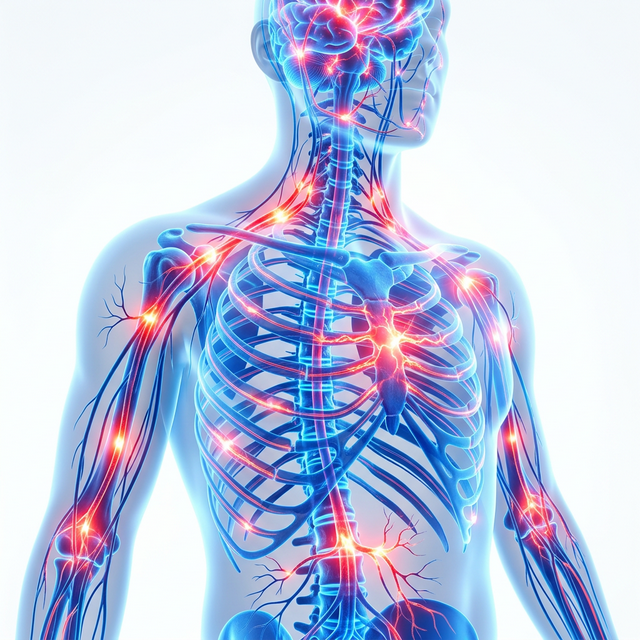
Clinical visualization of the peripheral nerve architecture and the inflammatory triggers of neuropathic signaling.
U.S. Clinical Protocols for Neuropathy
The first goal in American neuropathy care is identifying the underlying 'Insult' to the nerve. Once the cause is managed, medications focus on stabilizing the nerve's electrical membrane.
| Medication Class | Mechanism of Action | U.S. Clinical Role |
|---|---|---|
| Alpha-2 Delta Ligands | Binds to calcium channels to quiet nerves. | Gabapentin, Pregabalin (Lyrica) |
| TCAs (Low Dose) | Increases norepinephrine for neural inhibition. | Amitriptyline, Nortriptyline |
| SNRIs | Enhances the body's natural pain-damping system. | Duloxetine (Cymbalta) |
| Topicals | Desensitizes surface-level nociceptors. | Capsaicin, Lidocaine Patch |
Regenerative Potential and Nerve Health
In the U.S., regenerative medicine is exploring the use of 'Alpha-Lipoic Acid' and specific B-Vitamin complexes to support the health of the Myelin sheath. While most nerves cannot 'repair' a severed connection, many damaged peripheral nerves can regenerate if the toxic environment (like hyperglycemia) is corrected. American physicians emphasize a 'Window of Opportunity' for treatment—the earlier a nerve injury is managed, the higher the chance of significant functional return.
The Role of Neuromodulation
For refractory nerve pain that does not respond to medication, U.S. specialists use 'Neuromodulation.' This involves a Spinal Cord Stimulator—a device that sends low-level electrical currents to the spine, replacing the pain signals with a gentle tingling sensation (Paresthesia). This technology has revolutionized the management of Failed Back Surgery Syndrome and Complex Regional Pain Syndrome in the United States.
Frequently Asked Questions (Nerve Pain)
What is Neuropathy?
Neuropathy is damage or dysfunction of one or more nerves that typically results in numbness, tingling, muscle weakness and pain in the affected area, commonly treated in U.S. neurology clinics.
Does nerve pain feel different than muscle pain?
Yes. In the U.S. clinical setting, nerve pain is often described as 'electric,' 'searing,' 'stabbing,' or 'cold,' whereas muscle pain is usually 'aching' or 'throbbing.'
Can nerves heal in the U.S.?
Nerves heal extremely slowly (about 1mm per day). In the United States, treatment focuses on removing the source of the injury (like high blood sugar in diabetes) to allow for slow regeneration.
What is 'Diabetic Neuropathy'?
A type of nerve damage that can occur if you have diabetes. In the U.S., high blood sugar can injure nerves throughout your body, most often in your legs and feet.
Are Gabapentin and Lyrica the same?
They are both 'Gabapentinoids' that calm overactive nerves, but Pregabalin (Lyrica) is absorbed more consistently and generally acts faster in the U.S. clinical model.
Can Vitamin B12 deficiency cause nerve pain?
Yes. In the United States, doctors often test for B12 levels first, as a deficiency can lead to the breakdown of 'Myelin'—the protective coating around your nerves.
What is 'Allodynia'?
A symptom where something that shouldn't be painful (like the touch of a bedsheet) is perceived as excruciating. It's a hallmark of neuropathic pain in the U.S. medical system.
Is Tylenol effective for nerve pain?
Usually not. <Link href="/medications/acetaminophen">Acetaminophen</Link> works on the central chemical pathways, but it doesn't quiet the 'electrical' firing of damaged peripheral nerves that characterizes neuropathy.
What is a 'Nerve Conduction Study'?
A diagnostic test used in the U.S. that measures how fast electrical impulses move through your nerves, identifying the exact location of the damage.
How does stress affect neuropathy?
Stress releases cortisol, which can increase systemic inflammation and heighten the brain's focus on pain signals, often causing a 'flare' in nerve pain symptoms.
Clinical References
- The American Academy of Neurology (AAN). (2025). Guidelines for Diabetic Neuropathy.
- The Foundation for Peripheral Neuropathy. (2024). American Patient Resource Guide.
- Journal of the Peripheral Nervous System. (2026). Trends in Nerve Regeneration Science.