Codeine vs Hydrocodone: Clinical Comparison, Potency & Side Effects

Codeine and Hydrocodone are two of the most frequently prescribed opioids in the United States, often serving as the primary entry point for patients transitioning from over-the-counter pain relief to prescription-level narcotics. While they share a similar chemical foundation as phenanthrene derivatives, they occupy distinct tiers of potency and clinical utility. In American medicine, Codeine is typically reserved for 'minor' surgical recovery and severe cough suppression, whereas Hydrocodone (most commonly known by the brand names Vicodin or Norco) is the gold standard for 'moderate-to-severe' pain management.
In the USA, the choice between these two often hinges on the concepts of predictability and potency. Codeine's effectiveness is notoriously variable due to a 'metabolic lottery' involving liver enzymes, while Hydrocodone provides a more direct and consistent pharmacological effect. This 800+ word guide explores the superior potency of Hydrocodone, the specific safety restrictions placed on Codeine in U.S. pediatrics, and the rigid DEA scheduling differences that affect how these medications are dispensed in American pharmacies.

Dr. Kelsey Hopkins, MD
Dr. Hopkins practices rural family medicine in Southern Illinois, with a focus on community healthcare and chronic pain management.
Quick Reference Comparison
| Clinical Feature | Codeine | Hydrocodone |
|---|---|---|
| Drug Class | Natural Opiate | Semi-synthetic Opioid |
| U.S. Potency (MME) | 0.15 (Low) | 1.0 (Moderate) |
| Mechanism | Mu-Opioid (Prodrug) | Mu-Opioid (Direct Active) |
| DEA Schedule | Schedule III (Combo) or II | Schedule II |
| Common Brands | Tylenol #3, Tylenol #4 | Vicodin, Norco, Lortab |
| Primary Use | Minor Pain / Cough | Moderate/Severe Pain |
What is Codeine?
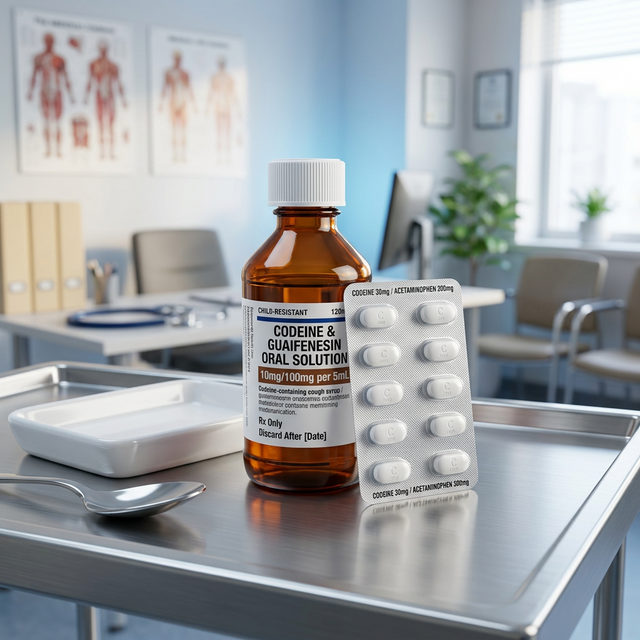
Codeine is a naturally occurring alkaloid derived directly from the opium poppy. It has been a cornerstone of American medicine for decades, primarily utilized for mild-to-moderate pain that does not respond to drugs like ibuprofen or naproxen. In the USA, Codeine is almost universally prescribed as a combination product with acetaminophen, such as Tylenol #3 (30mg codeine) or Tylenol #4 (60mg codeine). Beyond its use as a painkiller, Codeine is one of the most effective antitussives (cough suppressants) available to U.S. physicians.
The defining clinical trait of Codeine is that it is a 'prodrug.' It possesses very little analgesic power on its own. After ingestion, the U.S. patient's liver must use the CYP2D6 enzyme to convert codeine into morphine. Because of the vast genetic diversity in the United States, approximately 10% of patients are 'poor metabolizers' who receive no relief, while others may be 'ultra-rapid' metabolizers at high risk of morphine toxicity.
What is Hydrocodone?

Hydrocodone is a semi-synthetic opioid that has become the most widely prescribed narcotic for acute pain in the United States. Since 2014, when the DEA reclassified all hydrocodone-containing products to Schedule II, it has been under strict monitoring. Most American patients recognize it by the household names Vicodin, Norco, or Lortab, which combine hydrocodone with acetaminophen (APAP) to enhance pain relief and discourage abuse.
Unlike Codeine, Hydrocodone does not rely on a complex metabolic middle-man to work; it is active directly in the bloodstream. This makes its pain-relieving effects far more predictable for U.S. doctors to dose across a diverse patient population. It is significantly stronger than Codeine and is the primary choice in U.S. clinics for moderate pain following a bone fracture, a severe dental extraction, or abdominal surgery.
Mechanism of Action: How They Work
The primary difference in mechanism is 'Direct Activation.' Codeine essentially waits for your liver to create its active ingredient. In a U.S. clinical setting, this means the onset of relief is gentler and more gradual. Hydrocodone, conversely, begins binding to mu-opioid receptors in the central nervous system almost immediately. It 'numbs' the brain's perception of pain signals more aggressively and reliably than Codeine.
Hydrocodone also has a higher affinity for these receptors than the morphine produced by codeine. According to U.S. pharmacological standards, while they both belong to the same class, the direct-acting nature of Hydrocodone makes it the superior choice when a patient is in acute distress that requires rapid intervention.
Biological Comparison
Metabolic Delay
Codeine must convert to Morphine; Hydrocodone works as-is.
Potency Gap
Hydrocodone is roughly 6x stronger than Codeine.
Cough Reflex
Codeine is a direct antitussive; Hydrocodone is rarely used for cough in the USA.
Genetic Risk
Codeine is unreliable in 10% of patients; Hydrocodone works for all.
FDA-Approved vs. Off-Label Uses
- Codeine: FDA-approved for mild-to-moderate pain and cough suppression. It is strictly contraindicated for children under 12 in the USA due to risks of fatal respiratory depression.
- Hydrocodone: FDA-approved for moderate-to-severe pain. Off-label use in the USA sometimes includes severe, treatment-resistant chronic cough, although this is becoming rarer.
Potency and Clinical Strength
In the United States, clinicians use Morphine Milligram Equivalents (MME) to standardize opioid therapy. Codeine has an MME factor of 0.15, while Hydrocodone has an MME factor of 1.0 (equivalent to morphine). This means that 10mg of Hydrocodone is equivalent to 66mg of oral Codeine. In terms of pain scores, a 5mg Norco is roughly 10% more powerful than a Tylenol #3 tablet.
Hydrocodone is generally considered 'Level 3' on the WHO analgesic ladder, whereas Codeine is firmly 'Level 2'. For a U.S. patient, this is the difference between a minor dental filling (Codeine) and a major car accident trauma (Hydrocodone).
Bioavailability & Metabolism
Codeine's bioavailability is roughly 50% in the USA, but its utility is limited by its reliance on a single liver enzyme. Hydrocodone has a more consistent bioavailability (approx. 25-80%) and is metabolized by multiple pathways (including CYP3A4), which prevents the 'refractory' (non-responding) effect seen in many American Codeine patients.
Half-Life & Duration of Action
Both medications have similar half-lives of approximately 3 to 4 hours. This means both provide between 4 and 6 hours of analgesia per dose. In the USA, U.S. physicians often use long-acting versions of hydrocodone (like Hysingla ER) for chronic back pain, while long-acting codeine is virtually non-existent in American practice.
Clinical Efficacy and Indications
Clinical data from U.S. dental schools suggests that Hydrocodone provides more consistent relief for oral surgery pain. However, Codeine remains the U.S. clinical standard for Cough Relief. In most American Emergency Rooms, Codeine is no longer part of the standard 'pain protocol' because the response rate is too unpredictable compared to Hydrocodone or Oxycodone.
Typical Dosage and Administration
In the USA, Tylenol #3 (30mg) is the most common codeine dose. The typical starting dose for Hydrocodone/APAP in the USA is 5/325mg. U.S. pharmacists emphasize that both drugs are often limited by their Acetaminophen component; exceeding 4,000mg of Tylenol daily can cause fatal liver damage in American patients long before the opioid causes an overdose.
Side Effects and Adverse Reactions
Both medications cause the typical 'opioid triad' of side effects: pinpoint pupils, extreme constipation, and sedation. However, Codeine is much more likely to trigger a severe 'Itch' response due to massive histamine release. Hydrocodone is more likely to cause significant 'Brain Fog' and confusion in elderly U.S. patients.
Comprehensive Side Effect Analysis
| Adverse Event | Codeine (Opiate) | Hydrocodone (Opioid) |
|---|---|---|
| Constipation | Very Severe | Severe |
| Itching (Histamine) | High | Moderate |
| Mental Clarity | Lower Fog | Higher Fog |
| Nausea / Vomit | Very Common | Common |
| Drowsiness | Moderate | High |
🔴 Codeine Risks
- Severe Constipation (OIC)
- Itchy Skin
- Stomach Upset
- Dizziness
- Dry Mouth
🔴 Hydrocodone Risks
- Heavy Drowsiness
- Nausea
- Confusion
- Sweating
- Hard Stools
⚠ Critical Safety Note
Serious adverse reactions require immediate medical attention. The following are life-threatening signs:
- Lethal Respiratory Depression (Both)
- Rapid Physical Addiction (Hydrocodone)
- Lethal Overdose with Alcohol
- Acute Liver Failure (Combo pills)
Safety, Addiction Risk, and Controlled Status
⚠ U.S. Regulation: HYDROCODONE: HIGH / CODEINE: MODERATE
The **Addiction Risk** is undeniably higher for Hydrocodone. Its potency and immediate action make it far more reinforcing in the U.S. psychiatric model of dependency. This is evidenced by its DEA Schedule II classification, which forbids refills without a new, secure paper or electronic prescription from a U.S. clinician.
**Codeine Safety Risk:** The primary U.S. clinical concern is the 'genetic lottery.' Children under 12 and nursing mothers are strictly forbidden from using Codeine in the USA because 'Ultra-Rapid Metabolism' can lead to sudden, fatal respiratory arrest in their sleep.
**Interactions:** For both drugs, the most lethal U.S. interaction is Alcohol. Mixing a Norco or a Tylenol #3 with even a small amount of alcohol can result in fatal respiratory depression.
- Never mix either medication with Alcohol or Xanax.
- Hydrocodone is significantly more addictive than Codeine in the USA.
- Codeine is strictly restricted for U.S. children under 12.
- Both medications cause severe 'Opioid-Induced Constipation' requiring medical management.
Pharmacy Cost & U.S. Healthcare Access
In the United States, both are highly affordable as Tier 1 generics. A 20-tablet supply of generic Norco or Tylenol #3 typically costs less than $25 at national pharmacies like Walgreens or CVS.
Clinical Decision Flow: Which Should You Choose?
U.S. doctors follow the 'Predictability' rule. If you have a toothache or a broken rib that isn't debilitating, Codeine is a appropriate starting point. If you have had major surgery or a significant orthopedic injury, Hydrocodone is the standard choice because it is more reliable and stronger. If Codeine has failed to work for you in the past, your U.S. physician will likely move directly to Hydrocodone.
Codeine vs. Hydrocodone Selection Logic
Frequently Asked Questions
Yes. Milligram-for-milligram, Hydrocodone is about 6 to 10 times more powerful in U.S. potency charts.
Generally no. They are in the same chemical family and cross-reactivity is common in the USA. Consult your physician.
Codeine is much more likely to trigger a histamine release and cause 'opioid-induced itching'.