Codeine vs Methadone: Clinical Comparison, Potency & Side Effects
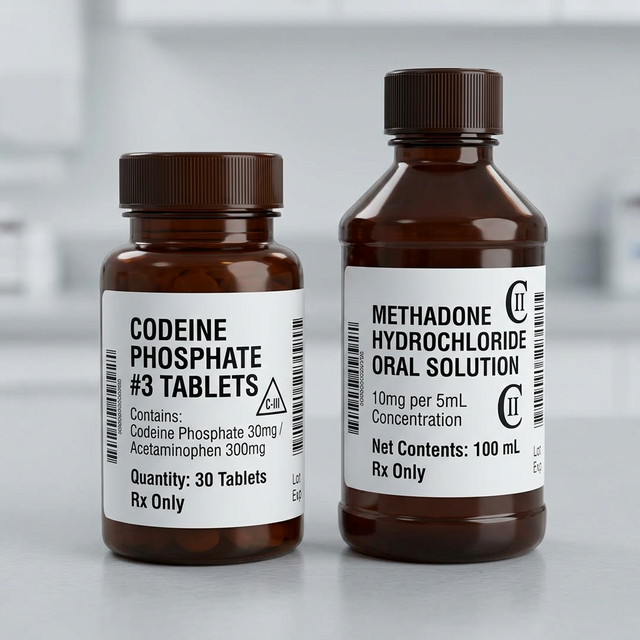
Codeine and Methadone occupy drastically different niches in the American pharmacological system, representing the difference between a 'short-term aid' and a 'long-term clinical anchor.' While both are opioids that bind to the brain's mu-receptors, their behavior in the human body is fundamentally distinct. Codeine is typically utilized for mild post-operative dental pain or acute cough suppression in the USA, while Methadone is a powerhouse narcotic reserved for chronic cancer pain and highly regulated Opioid Use Disorder (OUD) maintenance programs.
In the United States, transitioning a patient to Methadone is one of the most complex maneuvers a clinician can perform due to its 'unpredictable' half-life and unique heart-related risks. This 800+ word guide compares their vastly different metabolic timelines, the specific federal regulations governing Methadone in the USA, and why Codeine's 'genetic lottery' makes it unsuitable for the deep, stable relief required in chronic pain management.

Dr. Kelsey Hopkins, MD
Dr. Hopkins practices rural family medicine in Southern Illinois, with a focus on community healthcare and chronic pain management.
Quick Reference Comparison
| Clinical Feature | Codeine | Methadone |
|---|---|---|
| Drug Class | Natural Opiate | Synthetic Opioid |
| U.S. Potency (MME) | 0.15 (Low) | 3.0 - 12.0+ (Dynamic) |
| Mechanism | Mu-Opioid (Prodrug) | Mu-Opioid & NMDA Antagonist |
| Half-Life | 3 Hours (Short) | 8 - 59+ Hours (Extensive) |
| DEA Schedule | Schedule III (Combo) or II | Schedule II |
| Common Brands | Tylenol #3, Tylenol #4 | Dolophine, Methadose |
What is Codeine?

Codeine is a naturally occurring alkaloid derived from the opium poppy. It has been a standard of American outpatient care for over a century, primarily used for mild-to-moderate pain that does not resolve with NSAIDs. In the USA, Codeine is almost always dispensed as a combination product, most commonly Tylenol with Codeine (Tylenol #3). It is also the gold standard for prescription antitussive (cough) therapy in American clinics.
Codeine's primary limitation is that it is a 'prodrug.' It possesses negligible analgesic power on its own; it must be converted into morphine by the liver's CYP2D6 enzyme. In the United States, where genetic diversity is high, roughly 10% of patients are 'poor metabolizers' who receive zero benefit, while others may be 'ultra-rapid metabolizers' who are at high risk of accidental morphine toxicity from a standard dose.
What is Methadone?

Methadone is a fully synthetic opioid developed in the 1940s that has become a cornerstone of both chronic pain management and addiction medicine in the United States. It is a unique narcotic because it is highly lipophilic (fat-soluble) and stays in the body for an exceptionally long time. In American healthcare, it serves two primary roles: managing refractory chronic pain (often when other narcotics have failed) and preventing withdrawal and cravings in those recovering from opioid addiction (M.A.T.).
Unlike Codeine, Methadone is directly active and provides profound, long-lasting relief. However, because it can build up (accumulate) in the U.S. patient's body over several days, it is one of the most dangerous narcotics to dose incorrectly. In the USA, Methadone for addiction is highly regulated and usually dispensed through federally certified Opioid Treatment Programs (OTPs), while Methadone for pain is dispensed through traditional pharmacies.
Mechanism of Action: How They Work
The core difference between these two American staples is their duration and multi-receptor interaction. Codeine hits the receptor indirectly as Morphine, peaks quickly, and leaves quickly. It is designed for 'acute' spikes in pain. Methadone, however, binds very strongly and dissociates slowly, providing a 'steady state' of relief instead of the peaks and valleys seen with Codeine.
Crucially, Methadone also acts as an NMDA receptor antagonist. This means it can block certain types of 'nerve pain' (neuropathic pain) that Codeine and most other traditional opioids cannot touch. In American oncology units, this dual action makes Methadone a preferred choice for complex bone and nerve pain associated with cancer.
Pharmacological Comparison
Metabolism
Codeine is a prodrug; Methadone is directly active.
Potency Gap
Methadone is up to 80x stronger than Codeine.
Half-Life
Codeine leaves in 6 hrs; Methadone stays for days.
NMDA Effect
Methadone blocks nerve pain; Codeine does not.
FDA-Approved vs. Off-Label Uses
- Codeine: FDA-approved for mild-to-moderate pain and cough suppression. It is strictly restricted in the USA for children under 12.
- Methadone: FDA-approved for moderate-to-severe chronic pain and Opioid Use Disorder (OUD) maintenance.
Potency and Clinical Strength
Comparing Codeine to Methadone is hazardous because Methadone's potency is non-linear. In American clinical standards (MME), Codeine is always 0.15. Methadone starts at an MME of 3.0 at low doses but can jump to an MME of 12.0 or higher as the dose increases. On average, a mere 5mg of Methadone is equivalent to nearly 100mg of oral Codeine.
Methadone is reserved for 'Step 3' chronic pain, whereas Codeine is firmly 'Step 2'. For a U.S. patient, this represents the distance between managing a twisted ankle (Codeine) and terminal bone cancer or severe spinal trauma (Methadone).
Bioavailability & Metabolism
Codeine's bioavailability is roughly 50% in the USA, with extreme genetic variance. Methadone has a very high and remarkably consistent oral bioavailability (80%), making its effects far more predictable across the American population once a steady-state is reached.
Half-Life & Duration of Action
The biggest gap is chronicity. Codeine's half-life is ~3 hours. Methadone's half-life averages ~24 hours but can extend up to 120 hours in some American patients. This means Methadone stays in your system for five days after the pain relief has worn off, creating a massive risk for respiratory depression if the patient takes additional sedatives or alcohol.
Clinical Efficacy and Indications
Clinical data from U.S. hospice care suggest that Methadone is vastly superior for deep, constant chronic pain. Codeine is more effective only for Cough Suppression, as Methadone is not used for this purpose in the USA. For patients who have developed a high tolerance to other opioids, Methadone often restores relief when drugs like hydrocodone or codeine have become useless.
Typical Dosage and Administration
In the USA, Codeine is dosed every 4-6 hours. Methadone for pain is usually dosed twice or three times daily. U.S. federal guidelines for Methadone clinics (for addiction) usually involve a single daily liquid dose. American pharmacists warn that the 'sedative' peak of Methadone occurs long after the 'painkilling' peak, which is why patients should never adjust their own dose.
Side Effects and Adverse Reactions
Both share common opioid side effects like constipation, but Methadone carries a unique U.S. black-box warning for QTc Prolongation—a heart rhythm abnormality that can lead to sudden death. American clinicians often require periodic EKGs for patients on long-term Methadone therapy, a precaution never needed for Codeine.
Comprehensive Side Effect Analysis
| Adverse Event | Codeine (Opiate) | Methadone (Opioid) |
|---|---|---|
| Drowsiness | Moderate | Heavy |
| Constipation | Very Severe | Severe |
| Heart Rhythm Risk | Low | Significant |
| Itching (Histamine) | High | Low |
| Withdrawal Speed | Fast/Intense | Slow/Drawn Out |
🔴 Codeine Risks
- Severe Constipation (OIC)
- Heavy Itching
- Stomach Upset
- Dizziness
- Sluggishness
🔴 Methadone Risks
- Heavy Sedation
- Sweating
- Nausea
- Weight Gain (Long-term)
- Dry Mouth
⚠ Critical Safety Note
Serious adverse reactions require immediate medical attention. The following are life-threatening signs:
- Lethal Respiratory Depression (Both)
- QTc Prolongation (Heart Risk)
- Lethal Overdose with Alcohol
- Serotonin Syndrome (Rare with Methadone)
Safety, Addiction Risk, and Controlled Status
⚠ U.S. Regulation: METHADONE: HIGH (DECEPTIVE) / CODEINE: MODERATE
The addiction profile of both is high, but the nature of the dependency differs. Codeine withdrawal in the USA is usually intense but brief (5-7 days). Methadone withdrawal is notoriously drawn-out, often lasting weeks or even months because the drug takes so long to leave the body's fatty tissues.
**Methadone Safety Warning:** In the USA, the primary danger is 'stacking.' Because the drug builds up, a dose that feels safe on Monday may become lethal by Thursday as the blood levels slowly rise. Never mix Methadone with benzodiazepines (like Xanax) or alcohol.
- Never increase your Methadone dose without your doctor's direct supervision.
- Always inform your U.S. dentist or surgeon if you are on Methadone.
- Codeine is strictly restricted for U.S. children under 12.
- Methadone requires periodic EKG monitoring in American clinical practice.
Pharmacy Cost & U.S. Healthcare Access
Both are highly affordable in the USA as generics. Generic Methadone is often under $20 for a month's supply at standard pharmacies. However, for those in addiction programs, the cost is often covered by federal or state grants through U.S. Opioid Treatment Programs.
Clinical Decision Flow: Which Should You Choose?
The decision in American medicine is based on Chronicity. If you have a broken tooth or a minor surgical incision, Codeine is the safer, short-acting choice. If you have chronic lower back pain that has failed surgery, or you are managing a opioid addiction, Methadone is the mandated choice due to its stability and NMDA-blocking power. You would never switch directly from Codeine to Methadone; typically, intermediate steps like Morphine or Oxycodone are used first.
Codeine vs. Methadone Selection Logic
Frequently Asked Questions
Yes. depending on the dose, Methadone is 40 to 100 times more potent in clinical MME charts.
No. This is dangerous and can lead to immediate respiratory failure in the USA.
Its long half-life prevents the 'withdrawal-and-high' cycle, allowing American patients to remain stable and functional.