Methadone vs Fentanyl: Clinical Comparison, Potency & Side Effects
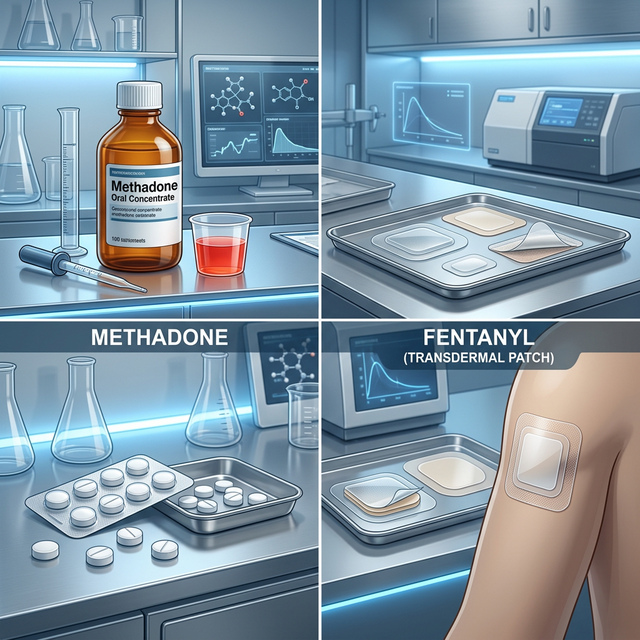
Methadone and Fentanyl represent the absolute summit of opioid potency in the American healthcare system. Both are purely synthetic, both are Schedule II controlled substances, and both are designed to manage pain that has failed to respond to every other treatment. However, their physical delivery and risk profiles are worlds apart.
- Methadone: A liquid or tablet medication known for its ability to 'level out' the brain's receptors for 24-36 hours.
- Fentanyl: A transdermal patch or rapid-acting film that is 100 times more powerful than morphine milligram-for-milligram.
In the U.S., these drugs are reserved for the most specialized clinical settings, including palliative care, chronic malignancy, and severe refractory pain states.

Dr. Kelsey Hopkins, MD
Dr. Hopkins practices rural family medicine in Southern Illinois, with a focus on community healthcare and chronic pain management.
Quick Reference Comparison
| Clinical Feature | Methadone | Fentanyl |
|---|---|---|
| U.S. Potency (MME) | 3.0 - 12.0 (High) | 100.0 (Extreme) |
| Primary Form | Liquid / 10mg Tablets | Transdermal Patch (Duragesic) |
| Duration of Action | 24-36 Hours | 72 Hours (Patch) |
| Key Clinical U.S. Use | Chronic Pain / OUD Maintenance | Severe Chronic Cancer Pain |
| Critical Risk | Cardiac QT Prolongation | External Heat Overdose (Lethal) |
Clinical Profile: Methadone
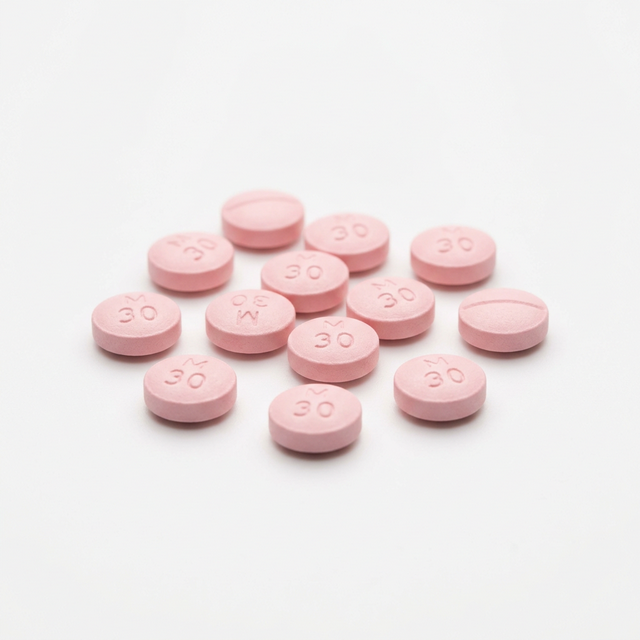
Methadone is the 'anchor' of long-term stability in the U.S. Its unique molecular shape allows for:
- Smooth Relief: A single dose prevents the 'ups and downs' of pain, providing a steady baseline.
- Nerve Protection: Its NMDA antagonism is a specialized tool used to 're-calibrate' nerves that won't stop firing.
- Maintenance: It is the primary tool for treating OUD in the U.S., allowing patients to avoid withdrawal without feeling high.
Because it builds up in body fat, it requires highly specialized dosing to avoid fatal accumulation over time.
Clinical Profile: Fentanyl
Fentanyl is a 'surgical-grade' tool adapted for outpatient use as a patch. Its defining features in the U.S. include:
- Ultra-Potency: 100 times stronger than Morphine; measured in micrograms (mcg) rather than milligrams (mg).
- Patch Technology: The transdermal system (Duragesic) delivers medicine through the skin over a 3-day period.
- Opioid-Tolerant Only: It is never prescribed for a patient who hasn't already been taking high-dose opioids for weeks.
Fentanyl is highly lipophilic (fat-soluble), meaning it enters the brain faster than almost any other opioid molecule.
Mechanism of Action: How They Work
Both medications are synthetic, but they interact with receptors differently:
- Methadone: Hooks onto Mu-receptors but also acts as an NMDA receptor antagonist. This prevents a condition called 'central sensitization,' where the brain gets stuck in a permanent pain loop. It is cleared slowly via multiple liver pathways.
- Fentanyl: A purely high-efficiency Mu-receptor agonist. It has a 'perfect fit' with pain receptors, allowing it to work with tiny amounts of medication. It is primarily processed by the CYP3A4 enzyme in the liver.
Molecular Dynamics & Delivery
NMDA Block
Methadone muffles the 'nerve alarm' in the central nervous system.
Micro-Dosing
Fentanyl works at 1/1000th the weight of other opioids.
Skin Path
Fentanyl bypasses the liver initially via the skin (Patch).
Metabolic Reach
Methadone interacts with more enzymes, leading to more drug risks.
FDA-Approved vs. Off-Label Uses
Strict FDA oversight for U.S. medical practice:
- Methadone FDA: Moderate-to-severe chronic pain; Opioid detoxification and maintenance.
- Fentanyl FDA: Management of pain in opioid-tolerant patients severe enough to require persistent opioid treatment.
- Strict REMS: Both drugs are part of the 'Risk Evaluation and Mitigation Strategy' to prevent diversion and accidental death.
Potency and Clinical Strength
Understanding the MME (Morphine Milligram Equivalent) Contrast:
- Methadone (4x - 12x): Potency scales with dosage. 10mg Methadone = 40mg Morphine. 60mg Methadone = 720mg Morphine.
- Fentanyl (100x): A 25mcg/hr patch is roughly equal to 60-90mg of Morphine per day.
- Clinical Note: While Fentanyl is more potent 'per milligram,' Methadone is often harder to dose because its effect builds up over 5-7 days.
Bioavailability & Metabolism
Biological uptake in the United States:
- Methadone: Bioavailability is extremely high (80-95%). Metabolism is complex (CYP3A4, 2B6).
- Fentanyl (Patch): Bioavailability is effectively 90% once the skin reaches 'saturation.' It depends heavily on CYP3A4; taking it with grapefruit juice or certain antibiotics can be fatal in the U.S.
Half-Life & Duration of Action
Timing and safety for American patients:
- Methadone: Half-life of 24-36 hours. Takes nearly a week to reach stability. Overdose risk is highest on days 3-5 of a new dose.
- Fentanyl (Patch): A single patch lasts 72 hours. However, it takes 12-24 hours to reach full effect after applying the first patch.
- The 'Tail' Effect: When you take off a Fentanyl patch, the drug stays in your skin and blood for another 17-24 hours.
Clinical Efficacy and Indications
U.S. Clinical Applications:
- Chronic Malignancy (Cancer): Fentanyl patches are the standard for dignity and ease of use.
- Opioid Use Disorder (OUD): Methadone is the gold standard; Fentanyl is never used for maintenance clinics.
- Complex Neuropathy: Methadone is preferred due to its NMDA blocking activity.
Typical Dosage and Administration
Common U.S. dosing guidelines:
- Methadone: Typical pain dose is 5mg to 10mg every 8-12 hours.
- Fentanyl: Typical patch doses are 12mcg, 25mcg, 50mcg, 75mcg, or 100mcg per hour, changed every 3 days.
- Equivalency Alert: Only an experienced pain management physician in the USA should attempt to convert a patient between these two.
Side Effects and Adverse Reactions
Adverse reaction comparison in American clinics:
- Sedation: Profound with both. Methadone can cause a more persistent 'mental fog.'
- Breathing: Fentanyl is the highest risk of acute respiratory depression; Methadone is the highest risk of 'delayed' depression.
- Heart Rhythm: Only Methadone typically carries the risk for QT-interval heart issues.
Comprehensive Side Effect Analysis
| Adverse Event | Methadone (Oral) | Fentanyl (Patch) |
|---|---|---|
| Skin Irritation | Low | Moderate (at patch site) |
| Heart Arrhythmia | High Risk | None |
| Breathing Arrest | Extreme (Delay Risk) | Extreme (Potency Risk) |
| Severe Sweating | Very High | Moderate |
| Mental Clouding | Extreme | Severe |
🔴 Methadone Risks
- Excessive daytime sleepiness
- Drenching night sweats
- Pinpoint pupils (Chronic)
- Severe constipation
- Low testosterone in men
🔴 Fentanyl Risks
- Itching or redness under the patch
- Nausea and vomiting
- Dizziness / Vertigo
- Headache
- Dry mouth
⚠ Critical Safety Note
Serious adverse reactions require immediate medical attention. The following are life-threatening signs:
- Fatal respiratory depression
- Torsades de Pointes (Methadone heart rhythm)
- Lethal Heat-Induced Overdose (Fentanyl Patch)
- Severe hypotension
- Hallucinations / Confusion
Safety, Addiction Risk, and Controlled Status
⚠ U.S. Regulation: MAXIMUM (USA SCHEDULE II)
Strict safety protocols for U.S. patients:
- The Heat Warning: A Fentanyl patch can 'dump' its entire 3-day dose into your blood in minutes if you use a heating pad or sit in a hot tub. This is almost always fatal.
- The EKG Requirement: Many U.S. clinics require an EKG every 6-12 months for Methadone patients to prevent sudden cardiac death.
- Pediatric Safety: A single used Fentanyl patch (even in the trash) contains enough medication to kill a child.
- Fentanyl: No hot tubs, electric blankets, or saunas while wearing the patch.
- Methadone: Report any 'skipped beats' or fainting immediately.
- Both: Absolutely zero alcohol or sleeping pills (Lethal interactions).
- Disposal: Fentanyl patches should be folded sticky-side-to-sticky and flushed down the toilet (FDA recommendation).
Pharmacy Cost & U.S. Healthcare Access
Pharmacy access and pricing:
- Methadone: Very cheap generic ($15-$30).
- Fentanyl (Patch): Generics are moderately expensive ($50-$100); Brand name Duragesic is highncost ($300+).
Clinical Decision Flow: Which Should You Choose?
U.S. clinical decision matrix:
- Choose Fentanyl: If the patient cannot swallow, has severe stomach absorption issues, or needs the convenience of a 3ndday dose.
- Choose Methadone: If the patient has neuropathic (nerve) pain or requires OUD maintenance therapy.
U.S. Clinical Selection Protocol
Frequently Asked Questions
Milligram for milligram, Fentanyl is far more potent. However, Methadone is still a powerful Schedule II narcotic.
NO. Cutting a reservoir-style patch can cause the immediate release of all medication, leading to a fatal overdose.
It binds tightly to proteins in the blood and tissues, slowly leaking back into the system over 24-36 hours.
Yes, they are generally waterndresistant for showering, but should be checked for peeling afterward.
Both carry the highest possible potential for addiction among legal medications in the USA.