Methadone vs Hydrocodone: Clinical Comparison, Potency & Side Effects
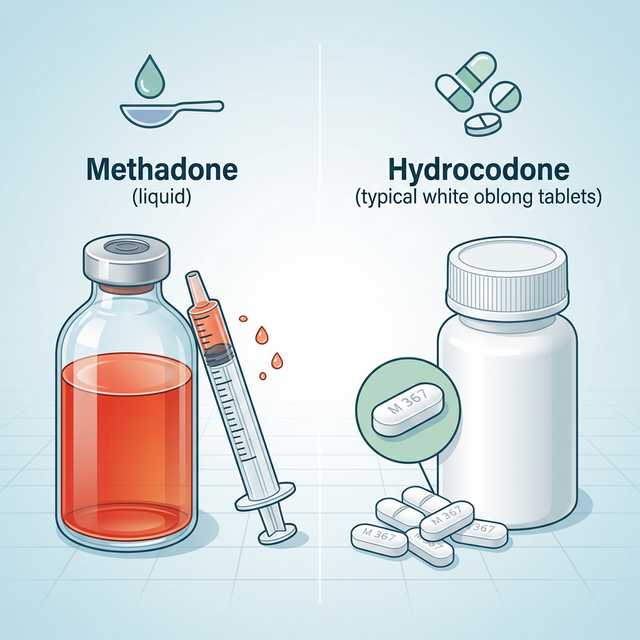
Methadone and Hydrocodone are two of the most frequently prescribed opioids in the United States, yet they serve vastly different clinical roles. One is a powerhouse reserved for the most severe chronic pain and addiction cases, while the other is a community-level staple for moderate pain relief.
- Methadone: A purely synthetic, long-acting opioid with dual-action on Mu and NMDA receptors.
- Hydrocodone: A semi-synthetic opioid, almost always combined with Acetaminophen (Tylenol) in the U.S. market.
Understanding the gap between these two is critical for patient safety, particularly because Methadone's potency is much higher and its behavior in the body is significantly more complex.

Dr. Kelsey Hopkins, MD
Dr. Hopkins practices rural family medicine in Southern Illinois, with a focus on community healthcare and chronic pain management.
Quick Reference Comparison
| Clinical Feature | Methadone | Hydrocodone |
|---|---|---|
| U.S. Potency (MME) | 3.0 - 12.0 (High/Variable) | 1.0 (Standard Moderate) |
| DEA Schedule | Schedule II | Schedule II |
| Typical Form | Liquid or 10mg Tablets | 5/325mg or 10/325mg Tablets |
| Half-Life | 24-36 Hours (Accumulative) | 3.8 Hours |
| Best For | Chronic Nerve Pain / OUD | Dental Work / Acute Minor Injury |
Clinical Profile: Methadone
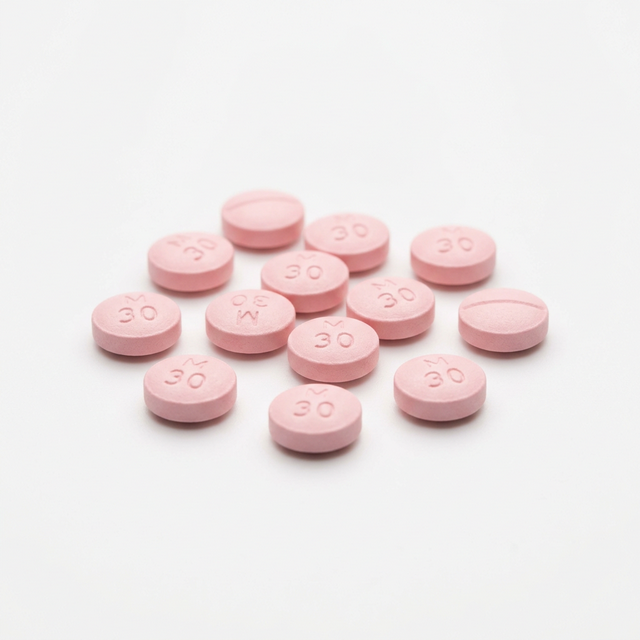
Methadone is a biological 'anchor' in U.S. pain management. Its key clinical features include:
- Longevity: A single dose can prevent withdrawal for over 24 hours, making it the bedrock of Opioid Use Disorder (OUD) treatment.
- NMDA Activity: It acts as a blocker for receptors that amplify nerve pain, making it effective where other opioids fail.
- Slow Build: It takes nearly a week for blood levels to stabilize, meaning doctors must follow the 'Start Low, Go Slow' rule.
Methadone is purely an opioid and does not contain Tylenol, which makes it safer for the liver at high doses.
Clinical Profile: Hydrocodone

Hydrocodone is the active ingredient in some of America's most famous brandndname painkillers, like Norco and Vicodin. In the U.S. medical system:
- Combination Pillar: It is almost never sold alone; it is paired with 325mg of Acetaminophen (Tylenol) to provide dual-action relief.
- Acute Authority: It is the 'gold standard' for outpatient dental surgery, fractures, and moderate sprains.
- Predictability: It works quickly (30-60 mins) and leaves the body quickly (4-6 hours).
It is generally considered the 'mid-tier' opioid before moving to Oxycodone or Fentanyl.
Mechanism of Action: How They Work
The chemical behavior of Methadone and Hydrocodone in the human body:
- Methadone (The Multi-Tasker): It stimulates Mu-receptors to block pain signals. More importantly, it acts as an NMDA antagonist, which actually changes how the brain perceives pain intensity. It is highly fat-soluble, storing itself in the body like a battery.
- Hydrocodone (The Direct Approach): A Mu-receptor agonist. It does not have NMDA activity. It must be converted by the liver enzyme CYP2D6 into Hydromorphone (Dilaudid) to reach its full pain-killing potential.
Cellular Action & Metabolism
NMDA Block
Methadone muffles the 'nerve alarm' in chronic pain states.
Liver Conversion
Hydrocodone depends on enzymes to 'turn on' its full power.
Tylenol Buffer
Hydrocodone's Tylenol component provides local anti-pain action.
Accumulation
Methadone stays in the blood 10x longer than Hydrocodone.
FDA-Approved vs. Off-Label Uses
FDA oversight and U.S. clinical regulations:
- Methadone FDA: Moderate-to-severe chronic pain; Opioid detoxification and maintenance.
- Hydrocodone FDA: Management of pain severe enough to require an opioid.
- Note: Hydrocodone was moved to Schedule II in 2014 by the DEA to reduce high abuse rates in the U.S.
Potency and Clinical Strength
Comparison on the Morphine Milligram Equivalent (MME) Scale:
- Hydrocodone (1.0x): Exactly equal in strength to Morphine. 10mg Hydro = 10mg Morphine.
- Methadone (Variable): Potency is not fixed. At 20mg/day, it's 4x Morphine. At 100mg/day, it acts like it's 12x stronger.
- Key Insight: Never assume a 1:1 switch is safe. Methadone is almost always significantly more powerful.
Bioavailability & Metabolism
Liver processing and safety profiles:
- Methadone: High bioavailability (80%+). It is metabolized by several pathways (CYP3A4, 2B6, 2C19), making it sensitive to hundreds of drug-to-drug interactions.
- Hydrocodone: Absorbed well but depends heavily on the CYP2D6 enzyme. If a patient lacks this enzyme, Hydrocodone may provide almost zero pain relief.
Half-Life & Duration of Action
Why timing matters in the USA:
- Methadone: Half-life of 24-36 hours. Because it lasts so long, it provides smooth, around-the-clock stability.
- Hydrocodone: Half-life of 3.8 hours. It wears off quickly, making it better for 'flares' but worse for constant chronic pain.
Clinical Efficacy and Indications
Effectiveness across different U.S. patient populations:
- Cancer/End-of-Life: Methadone is preferred for its potency and 24-hour stability.
- Dental/Minor Post-Op: Hydrocodone is the standard due to its predictable short duration.
- Nerve Pain (Neuropathy): Methadone is significantly more effective due to its NMDA antagonism.
Typical Dosage and Administration
Typical U.S. dosing regimens:
- Hydrocodone: 5mg or 10mg (with 325mg Tylenol) every 4-6 hours.
- Methadone (Pain): Often starts at 2.5mg or 5mg three times daily.
- Methadone (OUD): Standard maintenance is often 80mg-120mg once daily in specialized U.S. clinics.
Side Effects and Adverse Reactions
Adverse reaction comparison for American patients:
- Mental Fog: Profound with Methadone; moderate with Hydrocodone.
- Liver Strain: Only a risk for Hydrocodone due to its Tylenol component.
- Heart Safety: Only Methadone carries a risk for dangerous QT interval prolongation.
Comprehensive Side Effect Analysis
| Adverse Event | Methadone (Opioid only) | Hydrocodone (Combination) |
|---|---|---|
| Stomach Irritation | Low | Moderate (due to pills/Tylenol) |
| Itching / Skin Rash | Low | Moderate |
| Heart Rhythm Risk | Significant | None |
| Overdose Risk | Extreme (Accumulation) | Moderate (Metabolic) |
| Liver Damage Risk | None | High (at high doses) |
🔴 Methadone Risks
- Severe sedation and drowsiness
- Profuse sweating
- Intense constipation
- Swelling (Edema)
- Pinpoint pupils
🔴 Hydrocodone Risks
- Dizziness / Vertigo
- Nausea and vomiting
- Moderate itching
- Dry mouth
- Stomach upset
⚠ Critical Safety Note
Serious adverse reactions require immediate medical attention. The following are life-threatening signs:
- Respiratory arrest (Fatal)
- Torsades de Pointes (Fatal heart rhythm)
- Acetaminophen-induced liver failure (Hydrocodone)
- Severe hypotension
- Lethal drug stacking
Safety, Addiction Risk, and Controlled Status
⚠ U.S. Regulation: EXTREME (USA SCHEDULE II)
Safety regulations and risks in the United States:
- The Tylenol Cap: Hydrocodone users must never take Tylenol-brand pills or cold meds concurrently (4g max daily).
- The Accumulation Rule: Methadone can take 5 or 6 days to show its full danger, meaning an overdose could happen a week after a dose increase.
- DEA Standing: Both are high-risk narcotics with severe legal penalties for unauthorized distribution.
- Hydrocodone: Limit Tylenol intake to < 4,000mg per day.
- Methadone: Requires baseline and follow-up EKG tests for heart safety.
- Both: Absolutely no alcohol or Benzodiazepines (Xanax, Valium).
- Lock your meds; child ingestion of Methadone liquid is almost always fatal.
Pharmacy Cost & U.S. Healthcare Access
Pharmacy access and pricing:
- Hydrocodone: Extremely common and cheap ($10-$25 for generic Norco).
- Methadone: Tablets are very cheap, but liquid maintenance at clinics involves daily visit fees.
Clinical Decision Flow: Which Should You Choose?
Clinical decision-making for U.S. patients:
- Choose Hydrocodone: For temporary pain flares, fractures, or early-stage recovery.
- Choose Methadone: For severe, stable chronic pain, cancer pain, or if Tylenol is risky (liver disease).
U.S. Clinical Selection Protocol
Frequently Asked Questions
No. Methadone is far more potent and has a much higher risk of fatal accumulation.
U.S. guidelines generally advise against opioids for basic headaches due to rebound effects.
The liquid form (common in U.S. clinics) is usually flavored to make high doses more palatable and harder to inject.
Generally yes, as it does not typically cause the QT prolongation associated with Methadone.
Both are high-risk Schedule II narcotics. Hydrocodone is often misused for its 'euphoria', while Methadone has a deeper physical dependence.