Methadone vs Morphine: Clinical Comparison, Potency & Side Effects
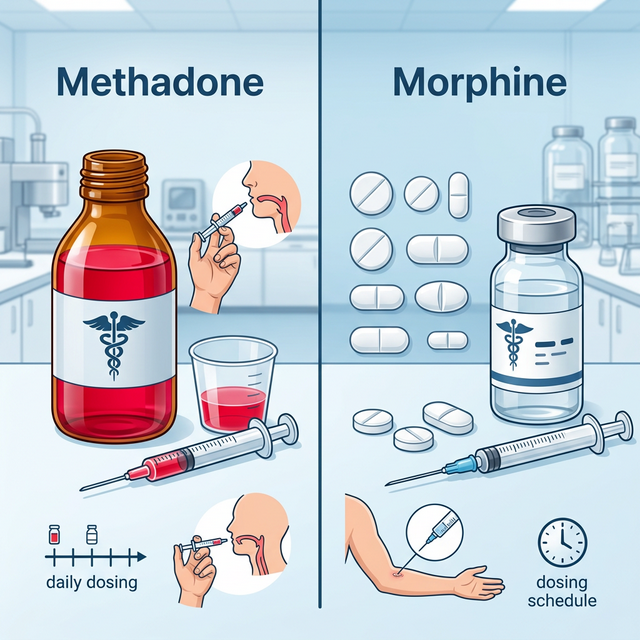
Methadone and Morphine are the two most foundational opioids in the history of pain management. In the United States, Morphine remains the universal 'yardstick' by which all other analgesics are measured, while Methadone serves as a unique synthetic alternative for situations where stability and long-term maintenance are paramount.
- Methadone: A highly fat-soluble synthetic opioid with a half-life that can stretch into days.
- Morphine: A naturally derived alkaloid from the poppy plant with a predictable, short-acting profile.
The relationship between these two is complex. While they both target the brain's pain centers, the way they build up in the body and their effect on the heart's rhythm couldn't be more different.

Dr. Kelsey Hopkins, MD
Dr. Hopkins practices rural family medicine in Southern Illinois, with a focus on community healthcare and chronic pain management.
Quick Reference Comparison
| Clinical Feature | Methadone | Morphine |
|---|---|---|
| U.S. Potency (MME) | 3.0 - 12.0 (High/Variable) | 1.0 (The Baseline) |
| DEA Schedule | Schedule II | Schedule II |
| Receptor Activity | Mu-Agonist + NMDA Antagonist | Mu-Opioid Agonist (Pure) |
| Best For | Chronic Nerve Pain / OUD | Acute Trauma / Post-Op / Palliative |
| Primary Danger | QT Prolongation / Accumulation | Histamine Release (Itching) |
Clinical Profile: Methadone
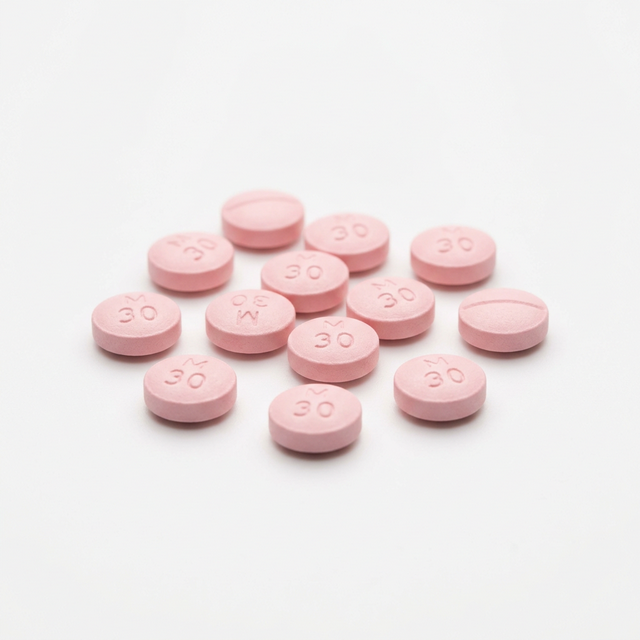
Methadone is a pharmacological 'anchor' in U.S. medicine. Its features include:
- Stability: It provides a very flat blood level, preventing 'withdrawal spikes' for 24-48 hours.
- Nerve Protection: Its NMDA blocking activity makes it a superior choice for 'burning' or 'electric' pains.
- Safety Margin: Because it takes at least 5-7 days to reach a stable state, it is dangerous for patients to 'self-adjust' their dose.
In the U.S., it is often used as a 'final step' for patients who have failed on more traditional opioids like Morphine.
Clinical Profile: Morphine
Morphine is the gold standard for clinical analgesia in American hospitals. It comes in two primary oral formats:
- Immediate Release (MSIR): Acts within 30 minutes; used for acute trauma or 'breakthrough' pain.
- Extended Release (MS Contin): A 12-hour pill that provides steady coverage for persistent pain.
- Safety: Because it has been used for over 200 years, its side effects and risks are perhaps the most well-documented of any drug.
While effective, it causes more significant histamine release than Methadone, leading to more itching and low blood pressure.
Mechanism of Action: How They Work
The molecular differences between Methadone and Morphine are significant:
- Methadone (The Multi-Tasker): Bonds tightly to Mu-receptors and also blocks NMDA receptors. This helps stop the 'wind-up' effect where the nervous system becomes permanently sensitized to pain. It is extremely lipophilic (fat-soluble), storing itself in body fat and releasing slowly.
- Morphine (The Classic): A pure Mu-agonist. It mimics the body's natural endorphins perfectly. It is water-soluble (hydrophilic), meaning it doesn't store in fat and is cleared by the kidneys more predictably.
Receptor Dynamics & Storage
NMDA Buffer
Methadone's dual action is superior for chronic neuropathy.
Water Soluble
Morphine clears the body quickly via the kidneys.
Fat Storage
Methadone 'charges' the body like a battery over several days.
Histamine Hit
Morphine triggers a heavy release of skin-itching chemicals.
FDA-Approved vs. Off-Label Uses
U.S. FDA oversight and clinical usage:
- Methadone FDA: Severe chronic pain; Opioid detoxification and maintenance (OUD).
- Morphine FDA: Management of pain severe enough to require an opioid.
- Off-Label Morphine: Frequently used in the U.S. to relieve shortness of breath in terminal lung disease patients.
Potency and Clinical Strength
Understanding the MME (Morphine Milligram Equivalent) Scale:
- Morphine (1.0x): The baseline. 10mg = 10mg.
- Methadone (Variable Ratio):
- At low doses (1-20mg), Methadone is about 4x Morphine.
- At moderate doses (21-40mg), it is about 8x Morphine.
- At high doses (>60mg), it can be 12x or even 15x Morphine.
- The Danger: This 'exponential' potency is why Methadone conversions are only performed by specialists in the USA.
Bioavailability & Metabolism
Liver and Kidney processing differences:
- Morphine: Bioavailability is relatively low (20-40%) because the liver destroys much of it on the first pass. It relies on a process called 'glucuronidation.'
- Methadone: Bioavailability is extremely high (80-95%). It is metabolized by several CYP450 enzymes (3A4, 2B6). This makes it more prone to drug-drug interactions than Morphine.
Half-Life & Duration of Action
The time-course of relief for U.S. patients:
- Morphine: Half-life is 2-4 hours. It provides 4 hours of relief (IR) or 12 hours (ER).
- Methadone: Half-life is 24-36 hours. Because it lasts so long, it provides a very steady baseline, but it doesn't peak quickly enough for sudden breakthrough pain.
Clinical Efficacy and Indications
Effectiveness in U.S. clinical settings:
- Acute Trauma: Morphine (IV or Oral) is the worldwide standard.
- Refractory Nerve Pain: Methadone is far superior to Morphine.
- Maintenance: Only Methadone is used for OUD in the U.S.; Morphine maintenance is not an approved clinical standard.
Typical Dosage and Administration
Typical U.S. dosing guidelines:
- Morphine: 15mg to 30mg IR every 4 hours for acute pain.
- Methadone: Often starts as low as 2.5mg twice daily, regardless of the patient's previous Morphine dose.
- The 'Slow Onset' Warning: Methadone won't take full effect for 3-5 days. Do NOT increase the dose early.
Side Effects and Adverse Reactions
Adverse reaction comparison in American clinics:
- Itching/Redness: Significant with Morphine; rare with Methadone.
- Heart Safety: Methadone can prolong the QT interval; Morphine does not.
- Sweating: Profuse 'drenching' sweats are more common with Methadone.
Comprehensive Side Effect Analysis
| Adverse Event | Methadone (Synthetic) | Morphine (Natural) |
|---|---|---|
| Skin Itching / Hives | Low | Extremely High |
| Heart Arrhythmia | High Risk | None |
| Constipation | Very High | Very High |
| Nausea / Vomiting | Moderate | High |
| Sweating | Extreme | Moderate |
🔴 Methadone Risks
- Profound drowsiness/sedation
- Profuse night sweats
- Pinpoint pupils
- Swelling in extremities
- Intense constipation
🔴 Morphine Risks
- Severe itching (Pruritus)
- Flushing of the face/neck
- Dry mouth
- Confusion in the elderly
- Drop in blood pressure when standing
⚠ Critical Safety Note
Serious adverse reactions require immediate medical attention. The following are life-threatening signs:
- Lethal respiratory arrest
- Torsades de Pointes (Methadone heart rhythm)
- Lethal drug-to-drug accumulation
- Chronic hormonal suppression
- Bile duct spasm (More common with Morphine)
Safety, Addiction Risk, and Controlled Status
⚠ U.S. Regulation: CRITICAL (USA SCHEDULE II)
U.S. Safety protocols and addiction risks:
- Heart Monitoring: Patients starting high-dose Methadone in the U.S. are generally required to have a baseline EKG.
- Kidney Health: Morphine must be used cautiously in patients with kidney failure because it can build up and cause twitching or seizures.
- Abuse Profile: Both carry extreme risks of addiction, but Methadone's withdrawal is often described as 'longer and deeper' due to its half-life.
- Methadone: Report any fainting or dizziness immediately (Heart alarm).
- Morphine: If itching is severe, an antihistamine may be needed, but consult your doctor.
- Both: Never mix with alcohol, sleeping pills, or Xanax (Lethal mix).
- Locked storage is mandatory; a single Methadone tablet can kill a toddler.
Pharmacy Cost & U.S. Healthcare Access
Insurance and pharmacy pricing:
- Morphine (Generic): Inexpensive ($15-40 per month).
- Methadone (Generic): Also very cheap tablets, though specialized OUD care has clinic fees.
- Availability: Both are usually on the 'Preferred' tier of U.S. insurance formularies.
Clinical Decision Flow: Which Should You Choose?
U.S. clinical decision matrix:
- Choose Morphine: For hospitalized acute pain, post-surgical recovery, or end-of-life breathing support.
- Choose Methadone: For chronic debilitating nerve pain, patients who are allergic to Morphine's itching, or addiction maintenance.
U.S. Palliative and Chronic Selection
Frequently Asked Questions
No. Morphine is from a plant; Methadone is entirely human-made in a lab. They have different chemical structures.
Because its potency changes exponentially transition as the dose goes up, making calculations very dangerous.
Rarely. Sometimes Morphine is used for 'breakthrough' pain in patients who take Methadone daily, but this requires expert supervision.
No. Morphine is generally considered safer for the heart's electrical rhythm.
Methadone. It provides a stable level for 24+ hours, whereas Morphine requires dosing every 4-8 hours.