Tramadol vs Ibuprofen: Clinical Comparison, Potency & Side Effects
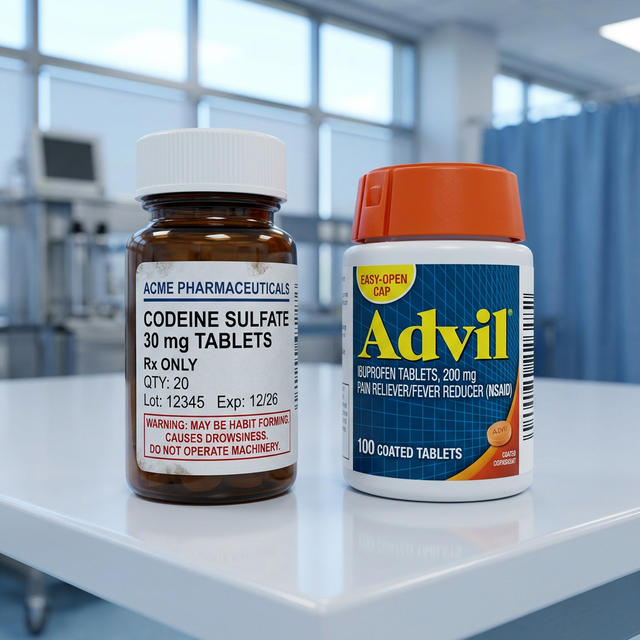
Tramadol (Ultram) and Ibuprofen (Advil, Motrin) represent the two most common 'step-up' options in American pain management. While Ibuprofen is a non-opioid staple found in every U.S. household, Tramadol is a Schedule IV controlled substance that requires a doctor's signature. The choice between them often hinges on whether the pain is driven by 'Inflammation' (Ibuprofen's specialty) or 'Nerve/Signal Processing' (Tramadol's specialty).
In the USA, combining these two is a standard practice known as 'Multimodal Analgesia,' allowing patients to get narcotic-level relief without the high-dose side effects of either. This guide explores the 'Tissue' vs 'Brain' mechanisms and the crucial safety warnings for stomach and kidney health in U.S. patients.

Dr. Kelsey Hopkins, MD
Dr. Hopkins practices rural family medicine in Southern Illinois, with a focus on community healthcare and chronic pain management.
Quick Reference Comparison
| Clinical Feature | Tramadol | Ibuprofen |
|---|---|---|
| Drug Class | Synthetic Dual-Action Opioid | NSAID (Non-Steroidal) |
| DEA Schedule | Schedule IV | OTC / Unscheduled |
| Primary Target | Brain & Spinal Cord (Receptors) | Injury Site (COX Enzymes) |
| Addiction Risk | Moderate | None / Zero |
| Primary U.S. Brands | Ultram, Conzip | Advil, Motrin |
What is Tramadol?
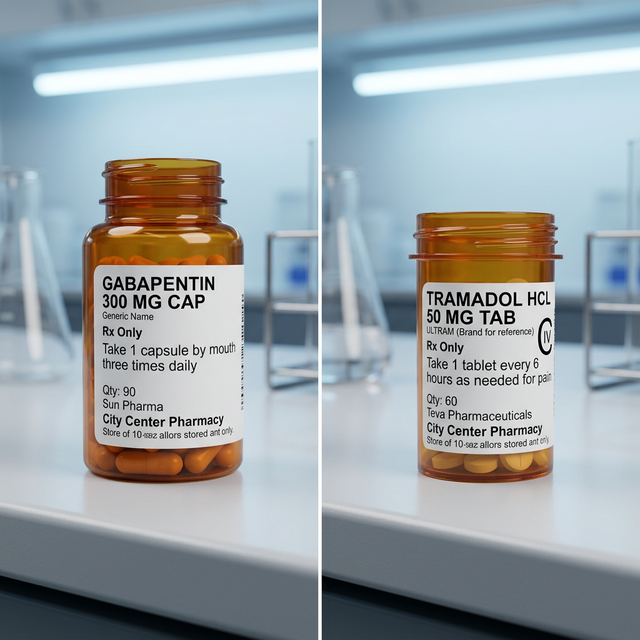
Tramadol is a synthetic opioid that works as a 'hybrid'. It binds weakly to opioid receptors while also increasing serotonin and norepinephrine levels. In the USA, it is frequently used for moderate pain that non-prescription drugs like Ibuprofen cannot manage, or for chronic conditions where inflammation is not the primary cause of pain.
What is Ibuprofen?

Ibuprofen is the most used anti-inflammatory in the United States. Available both Over-the-Counter (200mg) and by prescription (800mg), it works by blocking the COX-1 and COX-2 enzymes that cause swelling and heat at the site of an injury. In the USA, it is the first-line treatment for dental pain, menstrual cramps, and minor sports injuries.
Mechanism of Action: How They Work
Ibuprofen works at the 'Perimeter'—the site of the cut, bruise, or infection—to stop the production of prostaglandins. Tramadol works at the 'Command Center'—the brain and spinal cord—to change how those signals are perceived. In U.S. clinical terms, Ibuprofen 'fixes the fire' while Tramadol 'mutes the alarm'.
Pathway Diversity Map
COX Blockade
Ibuprofen stops the source of inflammation.
Opioid Signal
Tramadol blocks the perception of pain centrally.
Dual Layer
Combining them hits pain from two separate biological angles.
FDA-Approved vs. Off-Label Uses
- Tramadol: FDA-Approved for pain. Often used for chronic back pain.
- Ibuprofen: FDA-Approved for pain, fever, and inflammation. Safe for most U.S. adults for short-term use.
Potency and Clinical Strength
You cannot directly compare the 'potency' of an opioid to an NSAID. However, for **Inflammatory Pain** (like a swollen ankle), 400mg of Ibuprofen is often 'stronger' than 50mg of Tramadol. For **Non-Inflammatory Pain** (like a nerve pinch), Tramadol is significantly more effective.
Bioavailability & Metabolism
Tramadol relies heavily on the liver to become active. Ibuprofen is metabolized in the liver but is primarily excreted by the kidneys. This is a critical distinction in the USA: U.S. patients with kidney disease should avoid Ibuprofen, while those with liver disease should be cautious with Tramadol.
Half-Life & Duration of Action
Ibuprofen half-life is short (2 hours). Tramadol half-life is longer (6-7 hours). This is why Advil (Ibuprofen) is usually taken every 4-6 hours, whereas Tramadol can often be spaced every 6-8 hours in American patients.
Clinical Efficacy and Indications
Ibuprofen is superior for arthritis, headaches, and fevers. Tramadol is often preferred for post-operative recovery or chronic 'deep' pain where NSAIDs have failed. In U.S. orthopedics, they are almost always prescribed together to maximize recovery.
Typical Dosage and Administration
Ibuprofen is dosed from 200mg to 800mg (Max 3200mg/day). Tramadol is dosed from 50mg to 100mg (Max 400mg/day). In the USA, exceeding the Ibuprofen limit leads to stomach ulcers, while exceeding the Tramadol limit leads to seizures.
Side Effects and Adverse Reactions
Ibuprofen is hard on the stomach and kidneys. Tramadol is hard on the brain and liver. U.S. doctors monitor for stomach bleeding with long-term Ibuprofen use and for dependency/seizures with Tramadol.
Comprehensive Side Effect Analysis
| Side Effect | Tramadol | Ibuprofen |
|---|---|---|
| Stomach Ulcers | Rare | Extremely High |
| Kidney Strain | None | Significant |
| Seizure Risk | Yes (at high dose) | None |
| Nausea | High | Common |
🔴 Tramadol Risks
- Nausea
- Sweating
- Dizziness
- Insomnia
🔴 Ibuprofen Risks
- Stomach upset
- Heartburn
- High blood pressure
- Fluid retention
⚠ Critical Safety Note
Serious adverse reactions require immediate medical attention. The following are life-threatening signs:
- Serotonin Syndrome (Tramadol)
- Internal Gastric Bleeding (Ibu)
- Acute Kidney Failure (Ibu)
Safety, Addiction Risk, and Controlled Status
⚠ U.S. Regulation: Schedule IV (Tramadol) vs Unscheduled (Ibuprofen)
Ibuprofen has zero addiction potential but can be fatal to the kidneys or heart if overused. Tramadol is a controlled substance with a risk of dependency and potentially fatal respiratory arrest if combined with alcohol in the USA.
- Never take Ibuprofen on an empty stomach in the USA to avoid ulcers.
- Tramadol carries a seizure risk that Ibuprofen does not have.
- Both medications can interact with Blood Pressure meds in U.S. patients.
Pharmacy Cost & U.S. Healthcare Access
Ibuprofen is pennies per pill ($5/bottle OTC). Generic Tramadol is also very cheap ($10-$15/month). These are two of the most cost-effective pain tools in the American pharmacy.
Clinical Decision Flow: Which Should You Choose?
U.S. clinicians follow the 'Intensity vs. Inflammation' rule.
U.S. First-Line Selection
Frequently Asked Questions
Yes. In the USA, this is a very common 'double-attack' on pain. They work safely together because they target different biological paths.
Ibuprofen. Tramadol has no fever-reducing properties.
For the brain's pain perception, yes. But for a swollen joint, Advil (Ibuprofen) is actually the more effective 'medicine' for the cause of the pain.