Tramadol vs Vicodin: Clinical Comparison, Potency & Side Effects
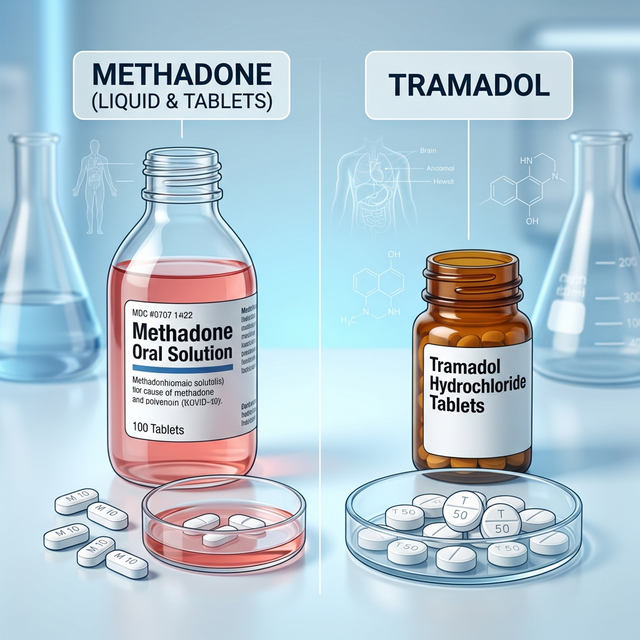
Tramadol (Ultram) and Vicodin (Hydrocodone/Acetaminophen) are the two most common 'second-tier' pain medications in the United States. While they both treat moderate pain, they operate through distinct chemical pathways. Vicodin is a traditional opioid combo, while Tramadol is a synthetic agent that affects both opioid receptors and neurotransmitters like serotonin.
In the USA, Vicodin is most famous for its 'Site + Brain' synergy, while Tramadol is prized for its ability to stabilize chronic nerve conditions. This guide explores the 10x potency gap, the liver safety limits of Vicodin, and the unique seizure risks of Tramadol.

Dr. Kelsey Hopkins, MD
Dr. Hopkins practices rural family medicine in Southern Illinois, with a focus on community healthcare and chronic pain management.
Quick Reference Comparison
| Clinical Feature | Tramadol | Vicodin |
|---|---|---|
| Drug Class | Synthetic Dual-Action Opioid | Hydrocodone + Acetaminophen (Combo) |
| DEA Schedule | Schedule IV | Schedule II (Strict Control) |
| MME Potency | 0.1 (Low Potency) | 1.0 (Baseline Potency) |
| Primary U.S. Form | Tramadol HCL (Single) | 5/300mg or 5/325mg (Combo) |
| Common U.S. Brands | Ultram, Conzip | Vicodin, Norco, Lortab |
What is Tramadol?
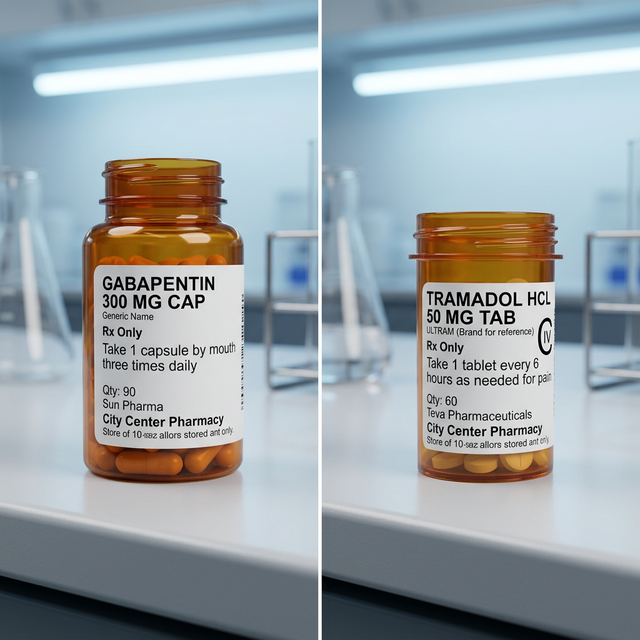
Tramadol is a synthetic opioid that changed the U.S. pain landscape in the 1990s. It works as a 'dual-action' hybrid—binding weakly to opioid receptors while boosting serotonin and norepinephrine levels. In the USA, it is frequently used for chronic 'mixed' pain (nerves + joints) where a 'lighter' narcotic effect is preferred to maintain daytime functionality.
What is Vicodin?
Vicodin is the classic American pain pill combo: Hydrocodone for the brain's pain receptors and Acetaminophen (Tylenol) for the injury site. In the USA, it is the 'Workhorse' for dental procedures, minor surgeries, and acute trauma. Because it contains Tylenol, it provides better relief for inflammation but carries a strict daily limit to protect the liver.
Mechanism of Action: How They Work
Vicodin targets two different pain sensors at once. Tramadol targets one sensor (opioid) and one chemical messenger (serotonin). In U.S. clinical terms, Vicodin is an 'Acute Trauma Workhorse,' while Tramadol is an 'Atypical Background Stabilizer.'
Pathway Logic Comparison
Opioid Signal
Vicodin binds 10x more strongly than Tramadol.
Chemical Boost
Tramadol increases Serotonin; Vicodin does not.
Tylenol Shield
Vicodin attacks inflammation directly at the source.
FDA-Approved vs. Off-Label Uses
- Tramadol: FDA-Approved for pain. Often used for chronic back pain and fibromyalgia in the USA.
- Vicodin: FDA-Approved for moderate to moderately severe pain. Standard for U.S. acute care.
Potency and Clinical Strength
Vicodin is approximately 10 times stronger than Tramadol per milligram of the opioid component. On the U.S. MME scale, Hydrocodone (in Vicodin) is 1.0 (equivalent to Morphine), while Tramadol is 0.1. Taking one 5mg Vicodin is roughly equivalent to taking 50mg of Tramadol in narcotic strength.
Bioavailability & Metabolism
Both rely on liver conversion. Vicodin works very reliably for the majority of U.S. patients. Tramadol is more prone to 'failing' in patients with specific U.S. genetic types who cannot activate the drug efficiently in their liver.
Half-Life & Duration of Action
Vicodin peaks fast (1 hour) and wears off moderately (half-life 4 hours). Tramadol takes longer to peak (2 hours) but stays in the U.S. patient's body longer (half-life 6-7 hours).
Clinical Efficacy and Indications
Vicodin is superior for acute 'throbbing' pain like a toothache or a sprain. Tramadol is often preferred for chronic maintenance where excessive sedation must be avoided to keep the American patient working or driving.
Typical Dosage and Administration
Vicodin is limited by the **Acetaminophen** (liver safety). Tramadol is limited by the **400mg daily ceiling** (seizure risk). Confusing these two 'dose ceilings' is a major safety focus in U.S. pharmacies.
Side Effects and Adverse Reactions
Vicodin causes 'The Narcotic Itch' and significant constipation. Tramadol is more likely to cause nausea, sweating, and 'brain zaps' if stopped suddenly.
Comprehensive Side Effect Analysis
| Side Effect | Tramadol | Vicodin |
|---|---|---|
| Drowsiness | Moderate | High |
| Constipation | Common | Very High |
| Seizure Risk | Significant | None |
| Itching (Histamine) | Low | Extremely High |
🔴 Tramadol Risks
- Nausea
- Sweating
- Dizziness
- Insomnia
🔴 Vicodin Risks
- Pruritus (Itching)
- Somnolence
- Liver Strain (if overused)
- Constipation
⚠ Critical Safety Note
Serious adverse reactions require immediate medical attention. The following are life-threatening signs:
- Serotonin Syndrome (Tramadol)
- Grand Mal Seizures (Tramadol)
- Acute Liver Failure (Vicodin/APAP)
Safety, Addiction Risk, and Controlled Status
⚠ U.S. Regulation: Schedule II (Vicodin) vs Schedule IV (Tramadol)
Vicodin has a higher reward potential for euphoria, leading to its U.S. reclassification as Schedule II in 2014. Tramadol is lower-risk for abuse but has a complex dual-withdrawal profile that requires careful medical tapering in U.S. patients.
- Vicodin + Alcohol is a common cause of fatal breathing slowdown in the USA.
- Tramadol can cause seizures even at prescribed doses in some U.S. patients.
- Always track total Tylenol (APAP) intake when using Vicodin.
Pharmacy Cost & U.S. Healthcare Access
Both are extremely affordable in the USA. Generic Vicodin (Norco) and Ultram (Tramadol) are staples of $4-$10 discount lists at most American pharmacies.
Clinical Decision Flow: Which Should You Choose?
U.S. clinicians balance 'The Itch' against 'The Liver'.
U.S. Opioid Selection Filter
Frequently Asked Questions
Yes. Vicodin (Hydrocodone) is approximately 10 times more powerful at the opioid receptor than Tramadol.
It can dull the pain, but Tramadol is often more effective because it also addresses the 'hyperexcitability' of the nerves.
Due to high rates of abuse, diversion, and addiction, the DEA moved it to the strictest prescribable category in 2014.