
What is this medication
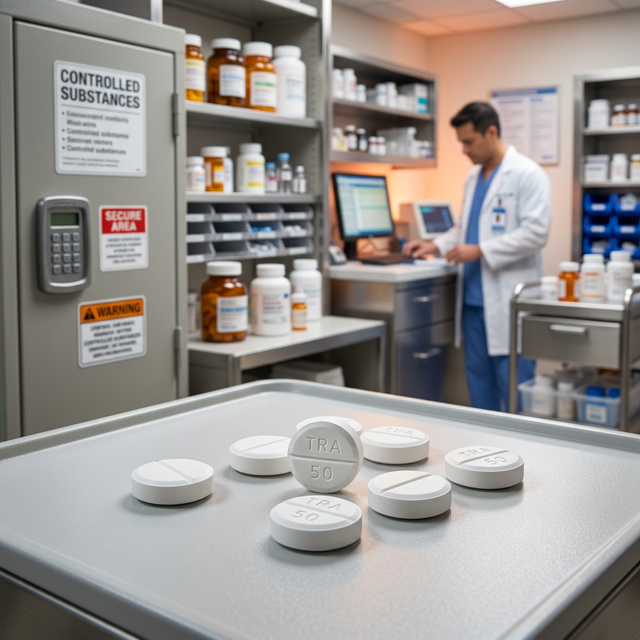
Tramadol (widely recognized in the United States by its original brand name Ultram) is a highly complex, completely synthetic pain medication that fundamentally skirts the line between a traditional narcotic and a powerful psychiatric drug.
For nearly twenty years, the U.S. government believed tramadol was virtually non-addictive and didn't classify it as a controlled substance at all. This lack of restriction caused prescriptions to skyrocket, making it a staple for treating osteoarthritis and back pain.
It was eventually discovered that while tramadol's "pure opioid" strength is exceptionally weak (roughly one-tenth the strength of Morphine), it powerfully alters serotonin and norepinephrine in the exact same manner as heavy antidepressant drugs like Duloxetine.
This "dual action" makes it excellent at treating lingering, chronic nerve pain that standard opiates miss, but it also means tramadol carries bizarre, terrifying risks—specifically spontaneous seizures—that traditional painkillers like Hydrocodone simply ignore.
| Clinical Specification | Detail |
|---|---|
| Chemical Derivation | Synthetic aminocyclohexanol |
| Pharmacologic Class | Weak MOR Agonist / SNRI Dual-Action |
| DEA Schedule | Schedule IV (C-IV) (Moved in 2014) |
| Common U.S. Brands | Ultram, Ultracet (w/ Acetaminophen) |
What is it used for
Tramadol is fundamentally viewed as the "step two" painkiller—utilized when over-the-counter NSAIDs like Ibuprofen fail, but before moving to heavy, highly restricted Schedule II narcotics like Oxycodone.
- Moderate Osteoarthritis: Tramadol is immensely popular in geriatric populations for treating chronic, grinding joint pain from arthritis. Because it is milder than morphine, it causes less severe respiratory depression in the elderly.
- Fibromyalgia & Neuropathy: True opioids like hydrocodone are terrible at treating generalized, burning nerve pain. Tramadol's antidepressant component actively suppresses nerve-pain signals in the spinal cord, making it highly effective for fibromyalgia symptoms.
- Post-Surgical Step-Down: Frequently given to a patient upon hospital discharge after minor orthopedic surgeries (like a knee arthroscopy) when the severe, acute surgical pain has faded into dull, aching pain.
How it works
Tramadol acts as a chemical 'chameleon.' The pill you swallow does almost nothing; your liver must physically break it down to activate its dual properties.
- The Liver Transformation (CYP2D6): The raw tramadol pill is completely useless for pain. Once swallowed, an enzyme in your liver (CYP2D6) physically converts it into the active metabolite "O-desmethyltramadol" (M1). The M1 metabolite is what actually binds to the mu-opioid receptors in the brain to numb the physical pain.
- The SNRI Antidepressant Action: Completely separate from the opioid effect, the raw tramadol molecule heavily blocks the brain from cleaning up Serotonin and Norepinephrine. This artificially floods the spinal cord with these chemicals, creating a 'descending pain block' that heavily mutes tingling nerve pain signals.
- The Genetic Lottery: Because it relies entirely on the liver to 'turn into' a narcotic, tramadol's effectiveness is a violent genetic lottery. Some patients (around 10% of Caucasians) lack the CYP2D6 enzyme entirely. For them, tramadol provides zero opioid pain relief, acting solely like an angry antidepressant pill.
Dosage guide
Tramadol dosing requires absolute precision. Exceeding the maximum daily limit significantly increases the risk of a violent, unprovoked seizure.
| Clinical Formulation | Standard Adult Dosage | Critical Warning |
|---|---|---|
| Generic Immediate Release (50mg Tablets) | 50mg to 100mg every 4 to 6 hours | NEVER EXCEED 400MG IN 24 HOURS. If you take 8 pills in an incredibly short span, the serotonin-boosting effect can instantly trigger a grand-mal seizure, even if you have zero history of epilepsy. |
| Ultracet (Tramadol + Acetaminophen) | 37.5mg / 325mg every 4 to 6 hours | You must factor in the Tylenol component. Taking over-the-counter Tylenol simultaneously risks causing fatal liver necrosis. |
| Tramadol ER (Extended Release) | 100mg to 300mg once daily | Never crush or chew. The wax matrix must slowly dissolve in the gut over 24 hours to prevent a massive sudden peak of the drug entering the brain. |
Side effects
Tramadol produces incredibly strange side effects because it forces the body to juggle the symptoms of both an opioid and a heavy antidepressant simultaneously.
Common U.S. clinical observations include:
- Severe Nausea & Vomiting: Tramadol is notorious for violently triggering the vomit center in the brain, particularly during the first few days of use. It frequently requires doctors to simultaneously prescribe strong anti-nausea medication like Zofran.
- Agitation & "Electric" Insomnia: Unlike morphine, which forces heavy sleep, the massive norepinephrine blast from tramadol acts like adrenaline. Patients frequently complain they feel 'wired', jittery, and entirely incapable of falling asleep despite being exhausted.
- Constipation & Urinary Retention: Taking the drug every day paralyzes the smooth muscle in the bowels and bladder. Routine use requires an aggressive regimen of daily fiber and stimulant laxatives.
- Profound Sweating (Hyperhidrosis): The serotonin influx artificially raises the core body temperature and triggers massive, drenching night sweats.
Warnings and precautions
Critical USA Precautions:
- The Brutal Dual-Withdrawal: Quitting tramadol cold-turkey is uniquely terrifying. You don't just suffer the agony, sweating, and diarrhea of opioid withdrawal. You simultaneously plunge into SNRI antidepressant withdrawal—causing severe electrical "brain zaps," intense paranoia, deep depression, and violent vertigo. You absolutely must taper down.
Drug interactions
Tramadol is fundamentally one of the most chemically dangerous multi-drug interaction hazards in the entire pharmacy:
- Cytochrome P450 Blockers (Prozac, Paxil): These popular antidepressants physically paralyze the exact CYP2D6 enzyme tramadol needs to turn into a painkiller. If you take Prozac, taking Tramadol provides zero pain relief while massively increasing the risk of a fatal seizure.
- Muscle Relaxants (like Cyclobenzaprine): Cyclobenzaprine heavily resembles a tricyclic antidepressant structurally. Mixing it with Tramadol amplifies both respiratory depression and the seizure risk to a terrifying degree.
- MAOIs: An absolutely fatal contraindication. Taking an older MAOI antidepressant within 14 days of tramadol almost guarantees lethal Serotonin Syndrome.
Alternatives
If the patient's liver lacks the enzyme to process tramadol, or the seizure risk is too severe, doctors switch to entirely different classes:
- Hydrocodone (Vicodin): The next direct step up in pure narcotic power. It is significantly stronger for severe physical pain and completely lacks the bizarre serotonin or seizure side-effects of tramadol, though it poses vastly higher addiction risks.
- Tapentadol (Nucynta): Essentially tramadol's massive, hyper-advanced younger brother. It uses the exact same dual mechanism (opioid + nerve block), but it skips the liver entirely, working instantly for everyone while being 5x stronger than tramadol.
- Duloxetine (Cymbalta) + NSAID: A completely non-narcotic combination. The Duloxetine targets the nerve pain exactly like tramadol does, while an NSAID like Meloxicam physically targets the joint swelling.
Cost in the United States
Tramadol is heavily integrated into all tiers of the American healthcare framework and is universally affordable.
| Formulation Type | Cost Details & Coverage |
|---|---|
| Generic Tramadol IR (50mg Tabs) | Extremely inexpensive. Almost universally covered by Medicare and Medicaid, with standard cash prices typically ranging from $10 to $20 for a massive 30-day supply of 120 pills using discount cards. |
| Ultram (Brand Name) | Essentially extinct in U.S. pharmacies. It offers absolutely zero medical justification over the cheap generic and would cost hundreds out-of-pocket if specially ordered. |
Availability in the US healthcare system
In 2014, the DEA abruptly woke up to the addiction reality and violently reclassified Tramadol nationwide.
Comparison with other medications
Tramadol sits perfectly in the middle of a massive clinical tug-of-war between opioids and nerve pills.
| Medication Comparison | Key Differences & Clinical Profile |
|---|---|
| Tramadol vs. Hydrocodone | Hydrocodone is fundamentally vastly superior at destroying pure, acute physical pain (like a broken leg). It is a pure, clean narcotic. Tramadol is much weaker for broken bones but acts almost like a neurological 'glue', making it highly superior for treating chronic, lingering fibromyalgia where standard opioids fail. |
| Tramadol vs. Tapentadol | Tapentadol is the modern, hyper-potent replacement for the tramadol mechanism. Tapentadol is roughly 4 to 5 times stronger, is a highly restricted Schedule II drug, and does not demand your liver perform a complex enzymatic conversion to make it work. |
Safety guidance
Tramadol demands a completely different safety paradigm at home compared to standard narcotic painkillers:
- The Genetic Non-Responder Audit: If you take your first 50mg Tramadol pill following surgery and experience absolutely zero pain relief and simply feel extremely jittery, you must call your surgeon for a new script. You are highly likely part of the 10% of the population genetically incapable of converting the drug into a painkiller. Taking more tramadol won't help; it will just trigger a seizure.
- Cold Medicine Quarantine: You must ruthlessly check every over-the-counter medicine you take. If you catch a cold and take heavily concentrated Robitussin (Dextromethorphan), you can inadvertently stack the serotonin levels so high alongside tramadol that you will trigger a life-threatening Serotonin Syndrome coma.
Frequently Asked Questions
What is Ultram exactly?
Why did a doctor tell me that Tramadol isn't a 'real' opioid?
Why isn't it working for my intense pain?
Can I take Ibuprofen while taking Tramadol?
Why do I feel completely wired and jittery on it instead of sleepy?
Can taking Tramadol randomly cause a seizure?
Is Tramadol highly addictive?
Why do I have the worst withdrawal symptoms imaginable when trying to quit?
What does taking Ultracet mean?
Can I drink alcohol with it?
Why am I sweating so heavily through my clothes?
Does Tramadol show up heavily on a standard drug test?
Why did my doctor refuse to prescribe it while I am on Lexapro?
How long does the generic pain relief last?
Is Tramadol considered stronger than Codeine?
Expert Verified Content
This clinical guide on Tramadol has been reviewed for accuracy by the US Pain Meds Medical Review Board, adhering to current FDA, NIH, and CDC standards in the United States.
Clinical References & Authority Sources
- U.S. Food and Drug Administration (FDA). Drugs@FDA Database.
- National Institutes of Health (NIH). DailyMed Library.
- Centers for Disease Control and Prevention (CDC). Pain Management Guidelines.
- Drug Enforcement Administration (DEA). Controlled Substance Act Schedules.