Understanding Central Sensitization
Fibromyalgia is no longer viewed as a 'musculoskeletal' issue in the U.S.; it is now classified as a 'Centralized Pain' or 'Nociplastic Pain' disorder. This means the volume on the body's pain system is turned up too high. Treatment in the United States focuses on medicines that interact with the neurotransmitters in the brain and spinal cord, such as serotonin, norepinephrine, and GABA, rather than targeting the muscles themselves.
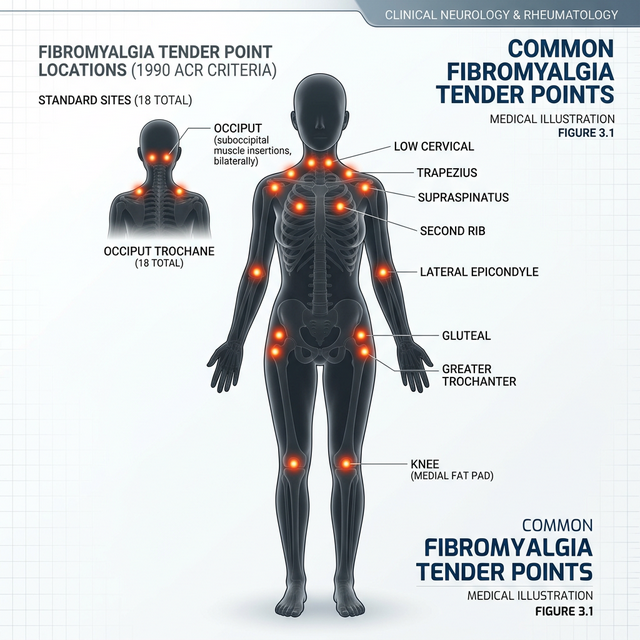
The modern clinical understanding of Fibromyalgia focuses on the central nervous system's processing of sensory input.
The FDA-Approved 'Big Three'
As of 2026, the U.S. FDA has approved only three medications specifically for Fibromyalgia. Most treatment plans in the American healthcare system begin with one of these agents.
| Medication Name | Drug Class | U.S. Clinical Focus |
|---|---|---|
| Lyrica (Pregabalin) | Gabapentinoid | Nerve signal stabilization & sleep. |
| Cymbalta (Duloxetine) | SNRI | Pain pathways & mood regulation. |
| Savella (Milnacipran) | SNRI | Fatigue & cognitive 'fog' symptoms. |
Off-Label Protocols: Gabapentin and TCAs
Because Fibromyalgia is highly individualized, U.S. physicians often turn to 'Off-Label' medications when the primary three are not tolerated. Amitriptyline (a tricyclic antidepressant) is one of the most studied and effective older treatments in the U.S. for improving the 'Restorative Sleep' that Fibro patients lack. Gabapentin, while chemically similar to Lyrica, is often used as a more cost-effective first step for managing the 'shooting' pains of the condition.
Safety and Multimodal Management
American clinical experts emphasize that medication is only one piece of the puzzle. In the U.S., the 'Gold Standard' for Fibro is a multidisciplinary approach combining low-impact aerobic exercise, Cognitive Behavioral Therapy (CBT) for pain coping, and pharmacological stabilization. Opioids are generally discouraged by major U.S. medical societies for Fibromyalgia, as they have been found to be largely ineffective for central pain and may lead to 'Opioid-Induced Hyperalgesia,' making the patient even more sensitive to pain over time.
Frequently Asked Questions (Fibro Medication)
Is Fibromyalgia a real clinical condition?
Yes. In the United States, Fibromyalgia is recognized by the ACR and CDC as a chronic disorder characterized by widespread pain and 'central sensitization'—where the brain processes pain signals differently.
What is the first-line medication in the U.S.?
FDA-approved medications include Duloxetine (Cymbalta), Pregabalin (Lyrica), and Milnacipran (Savella). These target the central nervous system rather than peripheral inflammation.
Why don't NSAIDs work for Fibro?
Because Fibromyalgia is a condition of 'Central Sensitivity' (brain/nerve) rather than 'Peripheral Inflammation' (tissue), standard anti-inflammatories like Ibuprofen often provide little relief.
Is Gabapentin used for Fibro?
Yes. While not specifically FDA-approved for Fibro (off-label), it is widely prescribed in the U.S. to calm overactive nerve signals and improve sleep quality.
Can LDN help Fibromyalgia?
Low-Dose Naltrexone (LDN) is an emerging 'off-label' treatment in the U.S. that may reduce neuroinflammation and improve the body's natural endorphin levels.
What is the role of exercise?
U.S. clinical guidelines emphasize 'Graded Exercise Therapy' (GET), particularly low-impact aerobics like swimming or walking, as a primary non-drug intervention.
Can I use CBD for Fibro?
Research is ongoing, but many U.S. patients report improvements in sleep and muscle tension. However, it is not currently a 'First-Line' clinical recommendation.
What are 'Tender Points'?
While the 18-point 'tender point' test was the old U.S. standard, modern diagnosis (2010/2016 ACR criteria) focus more on the 'Widespread Pain Index' and 'Symptom Severity' scale.
Does Fibro cause 'Fog'?
Yes. 'Fibro-fog' refers to cognitive difficulties including memory loss and poor concentration, often exacerbated by poor sleep and chronic pain intensity.
Is Fibromyalgia progressive?
No. Unlike MS or RA, it does not damage joints or organs. However, without management, the 'Central Sensitization' can worsen, making the brain more sensitive to pain over time.
Clinical References
- American College of Rheumatology (ACR). (2025). Criteria for Fibromyalgia Diagnosis.
- The Mayo Clinic. (2024). Comprehensive Management of Central Pain.
- US FDA. (2026). Approved Therapeutics for Chronic Widespread Pain.