Acetaminophen vs Ibuprofen: Clinical Comparison, Potency & Side Effects
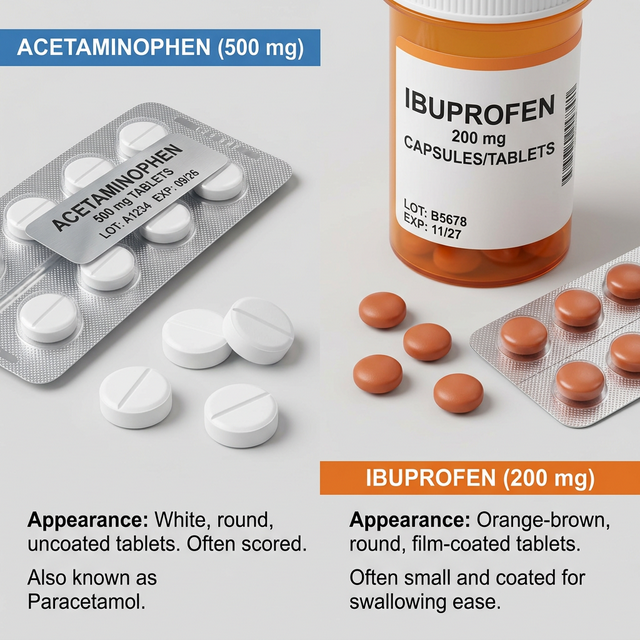
Acetaminophen (Tylenol) and Ibuprofen (Advil, Motrin) serve as the fundamental pillars of non-prescription pain management in the United States. While frequently used interchangeably by the American public, these two medications belong to entirely distinct pharmacological classes, each with unique pathways, benefits, and critical safety profiles. Acetaminophen functions as a central analgesic and antipyretic, primarily targeting the central nervous system to alter pain perception. In contrast, Ibuprofen is a non-steroidal anti-inflammatory drug (NSAID) that inhibits prostaglandin synthesis at the site of trauma or inflammation.
Choosing between them is rarely a matter of one being 'stronger' than the other; rather, it is about matching the medication to the specific physiological source of the pain and the patient's underlying health status. In U.S. clinical practice, this often follows 'The Organ Rule': Acetaminophen is metabolized primarily by the liver, while Ibuprofen is handled by the kidneys and can impact the gastrointestinal lining. This 800+ word guide provides a deep-dive analysis into the pharmacological differences, U.S. FDA-approved dosing standards, and the emerging clinical strategy of 'multimodal' alternating therapy for superior, opioid-sparing pain relief.

Dr. Kelsey Hopkins, MD
Dr. Hopkins practices rural family medicine in Southern Illinois, with a focus on community healthcare and chronic pain management.
Quick Reference Comparison
| Clinical Feature | Acetaminophen | Ibuprofen |
|---|---|---|
| Drug Class | Non-aspirin Analgesic / Antipyretic | NSAID (Non-steroidal Anti-inflammatory) |
| Primary Organ Risk | Liver (Hepatotoxicity) | Kidneys / Stomach (GI Bleed) |
| Anti-inflammatory? | No | Yes (Strong) |
| Central vs Peripheral | Central (Brain/Spinal Cord) | Peripheral (Site of Injury) |
| U.S. OTC Max Dose | 3,000mg-4,000mg per day | 1,200mg-3,200mg per day |
What is Acetaminophen (Tylenol)?

Acetaminophen, known globally as paracetamol but exclusively as acetaminophen in the United States, is the most commonly used over-the-counter pain reliever and fever reducer in America. Unlike aspirin or ibuprofen, acetaminophen is not an NSAID. It does not possess significant anti-inflammatory properties, making it unsuitable for swelling-related injuries. However, its safety profile regarding the stomach and blood clotting makes it the 'first-line' choice for American patients who cannot tolerate NSAIDs due to ulcers, blood thinner use, or pregnancy (under medical guidance).
In the USA, acetaminophen is ubiquitous, found in over 600 different prescription and non-prescription products. Its primary role in the U.S. healthcare system is the management of mild-to-moderate pain such as headaches, common colds, and dental extractions where swelling is minimal.
What is Ibuprofen (Advil/Motrin)?
Ibuprofen is a potent non-steroidal anti-inflammatory drug (NSAID) that became available over-the-counter in the United States in 1984. It works by inhibiting the cyclooxygenase (COX) enzymes, specifically COX-1 and COX-2, which are the biological 'factories' for prostaglandins. Prostaglandins are the signaling molecules that cause inflammatory symptoms: redness, swelling, heat, and pain. By blocking these at the source, Ibuprofen provides targeted relief for 'structural' pain.
American physicians frequently prescribe or recommend ibuprofen for conditions involving literal tissue damage or chronic inflammation, such as rheumatoid arthritis, menstrual cramps (dysmenorrhea), and acute musculoskeletal injuries like sprained ankles or tendonitis.
Mechanism of Action: How They Work
The fundamental difference lies in *where* the drugs work. Acetaminophen is thought to work centrally, primarily by elevating the overall pain threshold in the brain. It also acts on the hypothalamus—the body's thermostat—to lower temperatures during a fever. However, it lacks the peripheral action required to reduce swelling in a sprained joint.
Ibuprofen, conversely, works peripherally. When you injure your back or scrape your knee, your cells release chemicals that make the area sensitive and swollen. Ibuprofen stops the production of these chemicals. In U.S. clinical metaphors, Tylenol is like turning down the volume on the alarm system, while Ibuprofen is like sending a crew to put out the physical fire.
Pathway Diversity
COX Enzyme Blockade
Ibuprofen stops pain chemicals at the source of injury.
Pain Threshold Shift
Acetaminophen works on brain receptors to raise pain tolerance.
Fever Reset
Both drugs act on the hypothalamus to lower U.S. fever scores.
FDA-Approved vs. Off-Label Uses
- Acetaminophen: FDA-approved for the treatment of minor aches and pains associated with the common cold, headache, toothache, muscular aches, and backache. It is also the U.S. standard for fever reduction. Off-label uses in some U.S. hospitals include IV administration for post-operative recovery.
- Ibuprofen: FDA-approved for rheumatic diseases, mild-to-moderate pain, and primary dysmenorrhea. In the USA, it is also labeled for the temporary reduction of fever.
Potency and Clinical Strength
For non-inflammatory pain (like a simple tension headache), clinical trials in the USA suggest both medications are roughly equal in efficacy at standard doses (650mg Acetaminophen vs 400mg Ibuprofen). However, for 'Post-Dental Pain' or 'Orthopedic Trauma,' Ibuprofen 400mg consistently outperforms Acetaminophen 1000mg due to its ability to manage the inflammatory response following surgery.
Bioavailability & Metabolism
Acetaminophen is processed 100% by the liver. Specifically, it uses the glutathione pathway to neutralize a toxic metabolic byproduct called NAPQI. If glutathione is depleted (due to excessive dosing or alcohol use), NAPQI builds up and causes rapid liver failure. This is why the U.S. FDA strictly warns against mixing Tylenol with more than three alcoholic drinks daily.
Ibuprofen is primarily handled by the kidneys and filtered out of the blood. Long-term or excessive use in U.S. patients can lead to reduced blood flow to the kidneys, potentially causing chronic kidney disease (CKD) or acute kidney injury (AKI).
Half-Life & Duration of Action
Acetaminophen typically lasts 4 to 6 hours in the average adult. Ibuprofen tends to have a longer duration of 6 to 8 hours. In the United States, this difference often determines nighttime use; Ibuprofen is frequently preferred by American patients to ensure they don't wake up in the middle of the night as the medication wears off.
Clinical Efficacy and Indications
According to U.S. clinical guidelines, Ibuprofen is approximately 20% more effective for joint-related pain. However, Acetaminophen is preferred for viral fevers (like flu or COVID-19) to avoid the dehydration risks associated with NSAIDs. Multimodal studies in the USA have shown that taking *both* concurrently can be as effective as some low-dose opioids for acute pain management.
Typical Dosage and Administration
In the USA, Extra-Strength Tylenol capsules are 500mg each. The standard OTC dose is 1,000mg (2 pills). **CRITICAL WARNING:** You must not exceed 4,000mg in a 24-hour period. Many U.S. manufacturers have voluntarily lowered their recommended max to 3,000mg to improve the safety margin for the general public.
Standard OTC Advil is 200mg. U.S. guidelines allow up to 1,200mg per day for over-the-counter use. Under a doctor's supervision, prescription-strength Ibuprofen can go up to 3,200mg per day (800mg four times a day).
Side Effects and Adverse Reactions
Acetaminophen is remarkably gentle on the stomach and respiratory system, making it the preferred choice for American patients with asthma or gastric bypass surgery. Ibuprofen is notorious for causing 'NSAID-induced gastropathy'—dyspepsia, heartburn, and in severe cases, bleeding ulcers—if taken on an empty stomach.
Comprehensive Side Effect Analysis
| Area | Acetaminophen | Ibuprofen |
|---|---|---|
| Stomach Lining | Gentle / Safe | Irritating / Risk |
| Kidney Pressure | Low Risk | High Risk |
| Liver Load | High Risk (if overused) | Very Low |
| Heart Health | Neutral | Can rise BP |
🔴 Acetaminophen Risks
- Generally none at therapeutic doses
🔴 Ibuprofen Risks
- Stomach pain
- Heartburn
- Nausea
- Dizziness
⚠ Critical Safety Note
Serious adverse reactions require immediate medical attention. The following are life-threatening signs:
- Acute Liver Failure (A)
- Gastrointestinal Bleeding (I)
- Anaphylaxis (Rare for both)
Safety, Addiction Risk, and Controlled Status
⚠ U.S. Regulation: NONE (Non-narcotic)
Neither medication is a controlled substance or addictive. However, the 'hidden danger' of Acetaminophen in the USA is 'poly-pharmacy'—where a patient takes Tylenol, DayQuil, and a prescription painkiller like Percocet (which contains acetaminophen) simultaneously, resulting in a fatal cumulative dose. Ibuprofen's primary U.S. safety concern is its impact on cardiovascular health, as NSAIDs can slightly increase the risk of heart attack or stroke in those with existing heart disease.
- Never mix Acetaminophen with alcohol in the United States.
- Ibuprofen is contraindicated for U.S. patients with active GI ulcers.
- Acetaminophen is the only OTC painkiller consistently rated as safe for U.S. pregnancy.
Pharmacy Cost & U.S. Healthcare Access
Both are extremely inexpensive generics in the USA. A bottle of 500 tablets of either can often be found for less than $20 at major U.S. wholesale clubs like Costco or Sam's Club. Brand names (Tylenol, Advil, Motrin) typically carry a 300% markup over store-brand generics in American pharmacies.
Clinical Decision Flow: Which Should You Choose?
U.S. clinicians use the 'Site vs. Symptom' method. If you have fever or a 'clean' headache, start with Acetaminophen. If you have a sprain, toothache, or joint pain, Ibuprofen is objectively superior.
U.S. Household Pain Decider
Frequently Asked Questions
Yes. In the USA, it is common to take both at once or alternate them every 3-4 hours. This addresses pain via two separate biological pathways for significantly better relief without increasing the dose of either single drug.
Both are used in pediatric care. Acetaminophen is often the starting point for infants over 2 months, while Ibuprofen is usually reserved for infants over 6 months who are well-hydrated.
Alcohol induces an enzyme that converts acetaminophen into its toxic form (NAPQI) faster, while also depleting the liver's ability to clean it up.