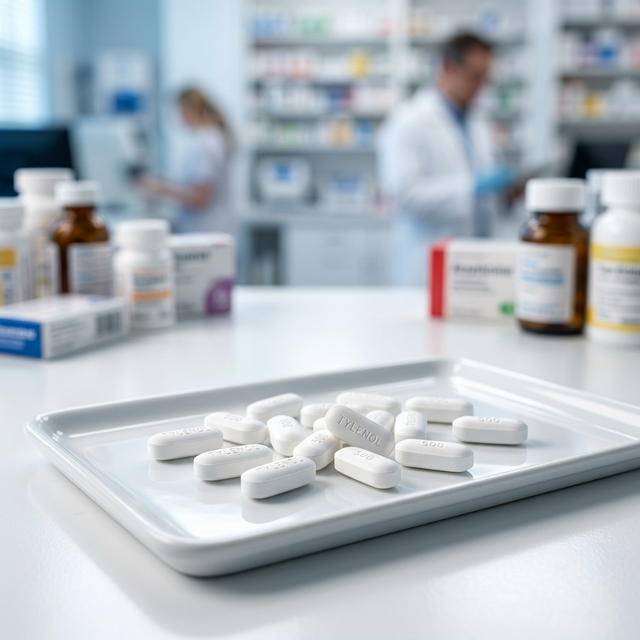

What is this medication
Acetaminophen, frequently referred to as APAP (acetyl-para-aminophenol), is a foundational medication in American healthcare.
Unlike NSAIDs such as ibuprofen or aspirin, it does not significantly reduce inflammation. However, it is highly effective at reducing both pain and fever.
It acts as the active ingredient in hundreds of over-the-counter (OTC) and prescription medications, most notably under the brand name Tylenol.
Because it is gentle on the stomach and does not thin the blood, U.S. clinicians frequently use it as an "anchor" medication for chronic pain management in patients who cannot tolerate NSAIDs.
| Clinical Specification | Detail |
|---|---|
| Chemical Name | N-acetyl-p-aminophenol |
| Pharmacologic Class | Central Analgesic |
| FDA Approval | Initially 1951 (Prescription), 1955 (OTC) |
| Common U.S. Brands | Tylenol, Excedrin, NyQuil (Combo) |
What is it used for
The FDA approves acetaminophen for the temporary relief of minor aches, pains, and fevers.
- Standard Pain Relief: Highly effective for headaches, muscular aches, backaches, and toothaches.
- Chronic Conditions: Used daily under supervision for minor pain associated with osteoarthritis.
- Fever Reduction: The primary antipyretic recommended by U.S. pediatricians for viral and bacterial infections.
- Post-Surgical Protocols: Intravenous (IV) acetaminophen (Ofirmev) is increasingly used in hospitals to reduce opioid dependency after major surgery.
How it works
Unlike NSAIDs, which work at the site of the injury, acetaminophen works primarily within the central nervous system (CNS).
- COX-3 Inhibition: It inhibits a specific variant of cyclooxygenase enzymes in the brain and spinal cord, reducing the production of pain-signaling prostaglandins.
- Serotonergic Pathways: It enhances descending inhibitory pathways in the spinal cord, blocking pain signals before they reach the brain.
- Systemic Safety: Because it barely affects peripheral enzymes, it does not irritate the stomach lining or disrupt blood clotting mechanisms.
Dosage guide
Proper dosing is the most critical safety factor. The FDA strictly regulates maximum doses to prevent accidental liver failure.
Maximum Daily Dosage Comparison (Adults)
| Age/Patient Group | Standard Dose | Maximum Daily Limit |
|---|---|---|
| Adults (Healthy) | 325mg - 1000mg every 4-6 hrs | 4,000mg (FDA Limit) |
| Adults (Liver Risk) | Consult Physician | 2,000mg - 3,000mg |
| Children (Under 12) | Weight-based (10-15mg/kg) | Max 5 doses in 24 hours |
Side effects
When taken exactly as directed, acetaminophen is exceptionally well-tolerated by the vast majority of patients.
Rare but possible common side effects include:
- Mild nausea or stomach discomfort.
- Loss of appetite.
- Rebound headaches (if overused chronically).
Severe Reactions: Though incredibly rare, some individuals may develop Stevens-Johnson Syndrome (SJS), a potentially fatal skin reaction. Stop use immediately if a rash or blistering occurs.
Warnings and precautions
Critical Precautions:
- Alcohol Use: Do not take acetaminophen if you consume three or more alcoholic drinks a day. The combination is highly toxic to the liver.
- Hidden APAP: Always check prescription labels for the acronyms "APAP" or "Acetam" (e.g., inside Vicodin).
Drug interactions
Acetaminophen has significantly fewer interactions than NSAIDs, making it safer for many polypharmacy patients.
- Warfarin (Coumadin): Long-term use of 2,000mg+ daily can slightly increase blood-thinning effects.
- Isoniazid: This tuberculosis drug drastically increases the risk of acute liver damage when combined with APAP.
- Anticonvulsants: Drugs like phenytoin accelerate the liver's breakdown of acetaminophen into its toxic byproduct.
Alternatives
If acetaminophen is ineffective, patients typically switch to anti-inflammatory agents.
- NSAIDs: Ibuprofen or Naproxen are vastly superior for physical swelling (like a sprained ankle).
- Aspirin: A classic alternative, though it carries a high risk of stomach bleeding.
- Topical Relief: Diclofenac gel or Lidocaine patches bypass the liver entirely for targeted joint pain.
Cost in the United States
Acetaminophen is universally affordable and available.
| Payment Method | Cost Details |
|---|---|
| Out of Pocket (Generic) | Extremely cheap. Typically $5 to $10 for a 100-count bottle at major U.S. pharmacies. |
| HSA / FSA Funds | Fully eligible for tax-free purchase without a prescription under recent U.S. tax laws. |
Availability in the US healthcare system
Sold practically everywhere (pharmacies, gas stations, supermarkets) with zero DEA restrictions.
- Forms Available: Tablets, liquid gels, pediatric syrups, and rapidly dissolving powders.
- Hospital Forms: Intravenous (IV) Ofirmev requires direct administration by a nurse.
Comparison with other medications
| Medication Comparison | Key Biological Differences |
|---|---|
| Acetaminophen vs. Ibuprofen | Acetaminophen protects the stomach but primarily tasks the liver. Ibuprofen powerfully completely reduces swelling but strongly irritates the stomach and tasks the kidneys. |
| Acetaminophen vs. Opioids | Acetaminophen provides baseline pain relief without any risk of addiction or respiratory suppression. It is frequently combined with opioids to boost overall effectiveness. |
Safety guidance
Ensuring family safety requires strict attention to labeling.
- Lock up Pediatric Liquids: Children frequently mistake cherry-flavored infant Tylenol for candy. Keep all bottles locked away high up.
- Do the Math: If you have a severe cold, physically calculate the milligrams of acetaminophen in your NyQuil, DayQuil, and Tylenol pills to ensure you stay under 4,000mg.
Frequently Asked Questions
What is the absolute maximum dose of acetaminophen for a U.S. adult?
Can I take Tylenol if I am also taking a prescription cold medicine?
Is it safe to take acetaminophen on an empty stomach?
Does acetaminophen reduce inflammation like Advil does?
How long does it take for acetaminophen to start working?
Can I drink alcohol while taking acetaminophen?
Is acetaminophen safe for pregnant women in the USA?
What is the difference between Extra Strength and Regular Strength?
Are there 'hidden' names for acetaminophen on labels?
Can I give adult acetaminophen to my child by cutting the pill?
Is acetaminophen addictive?
Whom should I call for a suspected acetaminophen overdose?
Can I take acetaminophen with Ibuprofen?
How should I dispose of expired acetaminophen in the USA?
Is generic acetaminophen as good as Tylenol?
Expert Verified Content
This clinical guide on Acetaminophen has been reviewed for accuracy by the US Pain Meds Medical Review Board, adhering to current FDA, NIH, and CDC standards in the United States.
Clinical References & Authority Sources
- U.S. Food and Drug Administration (FDA). Drugs@FDA Database.
- National Institutes of Health (NIH). DailyMed Library.
- Centers for Disease Control and Prevention (CDC). Pain Management Guidelines.
- Drug Enforcement Administration (DEA). Controlled Substance Act Schedules.