Gabapentin vs Hydrocodone: Clinical Comparison, Potency & Side Effects
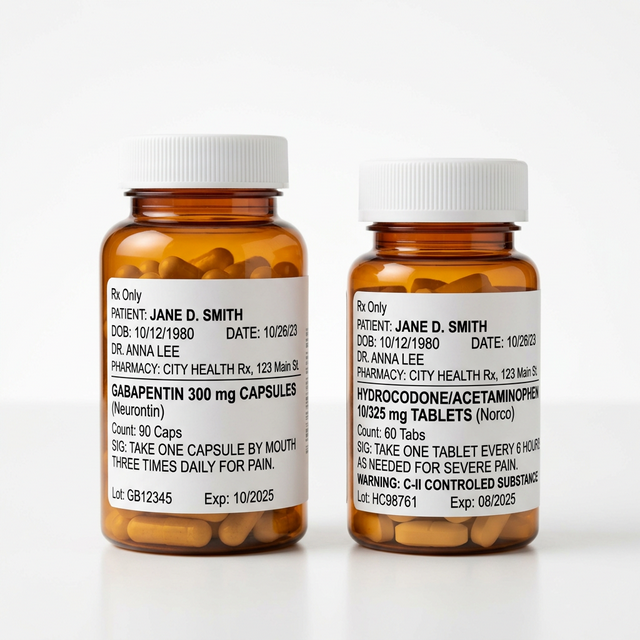
Gabapentin (Neurontin) and Hydrocodone (Vicodin, Norco) are among the most frequently prescribed 'Moderate-to-Severe' pain medications in the United States. While Hydrocodone is a direct opioid that 'muffles' the brain's pain receptors, Gabapentin targets the electrical misfiring of damaged or irritated nerves.
In modern U.S. clinical practice, these two are rarely viewed as competitors; instead, they are the 'Dynamic Duo' of multimodal analgesia. This guide explores their specific roles, the vital safety warnings when mixing them, and why American doctors use Gabapentin to effectively lower the dose of Hydrocodone required for relief.

Dr. Kelsey Hopkins, MD
Dr. Hopkins practices rural family medicine in Southern Illinois, with a focus on community healthcare and chronic pain management.
Quick Reference Comparison
| Clinical Feature | Gabapentin | Hydrocodone |
|---|---|---|
| Drug Class | Nerve Agent (Gabapentinoid) | Narcotic Opioid / Acetaminophen |
| DEA Schedule | Unscheduled / State Level V | Schedule II (High Control) |
| Primary Target | Calcium Channel Nerve Signals | Mu-Opioid Receptors |
| Potency (MME) | 0 (Non-Narcotic) | 1.0 (Standard benchmark) |
| Common U.S. Brands | Neurontin, Gralise | Norco, Vicodin |
What is Gabapentin?

Gabapentin is a non-opioid medication that stabilizes nerve activity. It is the primary tool in the USA for treating 'burning,' 'crawling,' or 'electric' sensations associated with nerve damage. Because it is non-addictive, it is preferred for chronic management over narcotics.
What is Hydrocodone?

Hydrocodone is the active opioid in drugs like Norco and Vicodin. In the USA, it is almost always mixed with Acetaminophen (Tylenol) to increase its effectiveness. It is used for acute trauma, surgical recovery, and chronic pain that has not responded to non-opioid therapy.
Mechanism of Action: How They Work
Hydrocodone binds to the brain's internal 'pain switches' to block the physical sensation of agony. Gabapentin, however, attempts to stop the overactive signal from reaching the brain in the first place by quieting the nerves' electrical baseline.
Combined Pain Blockade
Nerve Stabilizing
Gabapentin quiets the overstimulated electrical pathways.
Receptor Binding
Hydrocodone blocks pain signals at the receptor level.
Synergistic Relief
Using both targets pain at the source and the processing center.
FDA-Approved vs. Off-Label Uses
- Gabapentin: FDA-Approved for PHN and Seizures. Used Off-Label for Diabetic Neuropathy and Fibromyalgia.
- Hydrocodone: FDA-Approved for Acute and Chronic pain management (Schedule II).
Potency and Clinical Strength
Hydrocodone is the benchmark for oral opioid potency (1.0 MME). It is effective for physical injury but often weak for nerve pain. Gabapentin is the reverse: ineffective for a broken bone, but a 'heavyweight' for nerve damage.
Bioavailability & Metabolism
Hydrocodone depends heavily on the 'CYP2D6' liver enzyme to be converted into its more powerful form, Hydromorphone. Gabapentin skips the liver entirely and is filtered solely by the kidneys, making it safer for American patients with hepatic (liver) issues.
Half-Life & Duration of Action
Hydrocodone has a relatively short half-life of 3.8 to 4.5 hours. Gabapentin lasts slightly longer (5-7 hours). In both cases, U.S. patients typically require 3 to 4 doses daily for consistent chronic control.
Clinical Efficacy and Indications
Hydrocodone is superior for 'nociceptive' pain (tissue damage). Gabapentin is superior for 'neuropathic' pain (nerve damage). Mixing them is a standard 'Multimodal' protocol in U.S. orthopedics.
Typical Dosage and Administration
Hydrocodone doses are precise (5mg, 7.5mg, 10mg). Gabapentin doses vary widely (300mg to 3600mg). Never double up on Hydrocodone as it contains risky levels of Tylenol.
Side Effects and Adverse Reactions
Common side effects of both include significant fatigue and dizziness. Hydrocodone specifically causes severe constipation and itching (pruritus).
Comprehensive Side Effect Analysis
| Side Effect | Gabapentin Profile | Hydrocodone Profile |
|---|---|---|
| Constipation | Very Low | High |
| Nausea | Rare | Moderate |
| Dizziness | High | High |
| Leg Swelling | High | Low |
🔴 Gabapentin Risks
- Dizziness
- Lethargy
- Peripheral Edema
🔴 Hydrocodone Risks
- Constipation
- Itching
- Nausea/Dry Mouth
⚠ Critical Safety Note
Serious adverse reactions require immediate medical attention. The following are life-threatening signs:
- Respiratory Depression
- Liver Toxicity (from Acetaminophen)
- Severe Withdrawal Seizures
Safety, Addiction Risk, and Controlled Status
⚠ U.S. Regulation: Schedule II vs. Unscheduled
Hydrocodone is a high-risk Schedule II substance in the USA. While Gabapentin is non-addictive, mixing it with Hydrocodone significantly increases the 'Respiratory Depression' effect, which can be fatal. Modern U.S. guidelines require clinicians to warn patients of this interaction.
- Do not exceed 4g of Acetaminophen per day (liver risk).
- Hydrocodone carries a significant risk of physical dependence.
- Gabapentin can enhance the 'sedative' profile of opioids.
Pharmacy Cost & U.S. Healthcare Access
Both are widely available as low-cost generics. Hydrocodone prescriptions in the USA are strictly limited by law in many states to a 3 or 7-day supply for acute cases.
Clinical Decision Flow: Which Should You Choose?
U.S. clinicians look at the 'Nerve vs. Tissue' balance of the patient's pain.
Combined Therapy Logic
Frequently Asked Questions
For immediate injury pain, yes. For long-term nerve burning, Gabapentin is generally more effective and safer.
Yes, this is very common in the USA, but you must be monitored for increased drowsiness and breathing issues.
By quieting the nerve signal from below, it allows lower doses of central analgesics to be more effective.