Methadone vs Tramadol: Clinical Comparison, Potency & Side Effects
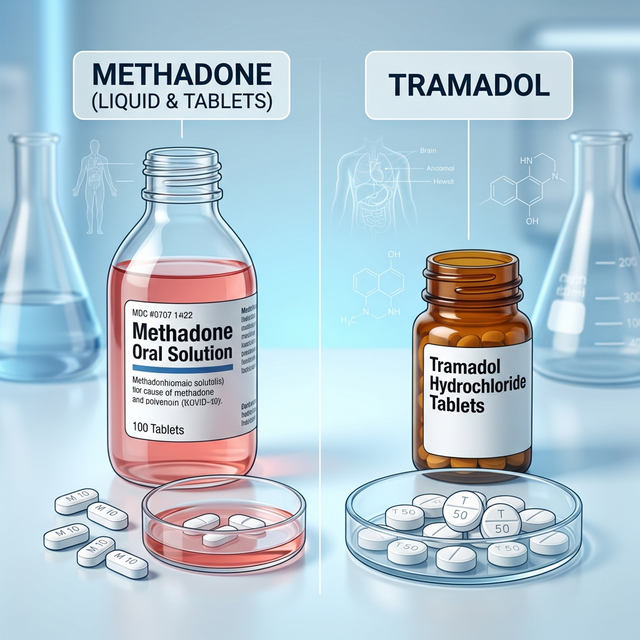
Methadone and Tramadol are both synthetic opioids used extensively in the United States, yet they exist in completely different pharmacological dimensions. While both are designed to manage pain, their potency, regulation, and biological mechanisms could not be more distinct.
- Methadone: A high-potency Schedule II opioid known for its long half-life and unique NMDA receptor activity.
- Tramadol: A low-potency Schedule IV 'hybrid' drug that combines weak opioid activity with serotonin and norepinephrine reuptake inhibition (SNRI).
In the American healthcare system, Methadone is typically reserved for the most severe chronic pain cases or Opioid Use Disorder (OUD) maintenance, whereas Tramadol is a common starting point for moderate acute or chronic pain.

Dr. Kelsey Hopkins, MD
Dr. Hopkins practices rural family medicine in Southern Illinois, with a focus on community healthcare and chronic pain management.
Quick Reference Comparison
| Clinical Feature | Methadone | Tramadol |
|---|---|---|
| DEA Schedule | Schedule II (Highly Restricted) | Schedule IV (Lower Restriction) |
| Primary Mechanism | Mu-Agonist + NMDA Antagonist | Weak Mu-Agonist + SNRI |
| U.S. Potency (MME) | 3.0 - 12.0 (Variable/High) | 0.1 (Low) |
| Best For | Severe Cancer / Nerve Pain / OUD | Moderate Post-Op / Arthritis |
| Key Risk | QT Prolongation / Accumulation | Seizures / Serotonin Syndrome |
Clinical Profile: Methadone
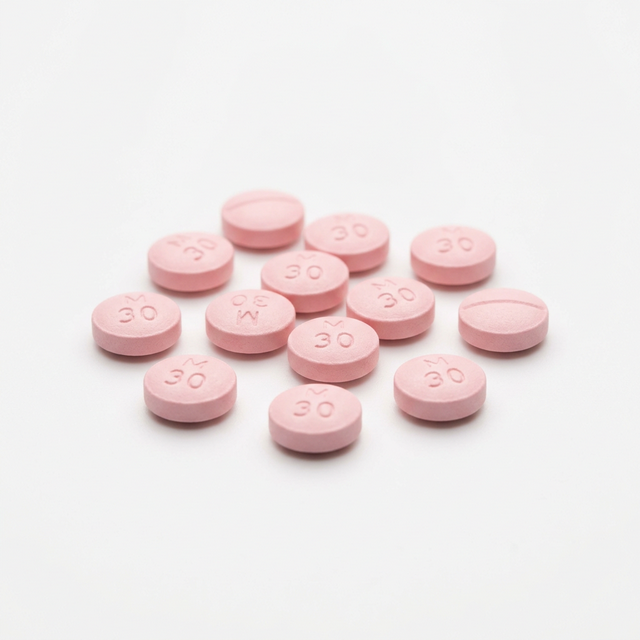
Methadone is one of the most pharmacologically complex tools in the U.S. physician's arsenal. In modern American medicine:
- Pain Management: It is highly effective for 'refractory' pain (pain that hasn't responded to other meds) because it blocks NMDA receptors, which are involved in nerve pain.
- Maintenance: It is the 'gold standard' for treating opioid addiction, preventing withdrawal for 24-36 hours.
- Longevity: Unlike most opioids, it stays in the system for days, providing a very stable baseline of relief.
Because it accumulates in the body, it requires very slow and careful dose adjustments by a specialist.
Clinical Profile: Tramadol

Tramadol (Ultram) is often viewed as a 'safer' or 'lighter' opioid in the United States. Key attributes include:
- Dual Action: It muffles pain signals like an opioid and boosts mood chemicals like an antidepressant.
- Metabolism: It is a 'prodrug,' meaning your liver must convert it into its active form (O-desmethyltramadol) to work.
- Wide Use: Frequently prescribed for 'safe' post-surgical recovery or chronic conditions like osteoarthritis.
Despite being Schedule IV, it still carries significant risks, particularly when mixed with other mood-altering medications.
Mechanism of Action: How They Work
The biological pathways of these two drugs diverge significantly at the molecular level:
- Methadone (The Sledgehammer): Binds tightly to Mu-receptors but also acts as an NMDA receptor antagonist. This dual action helps prevent 'central sensitization' (where the brain stays in a pain state even after healing).
- Tramadol (The Hybrid): Has a 'weak' grip on Mu-receptors. Its primary power comes from preventing the brain from reabsorbing Serotonin and Norepinephrine, effectively 'turning down the volume' of pain in the spinal cord.
Receptor Targets & Chemical Path
NMDA Block
Methadone's secret weapon against complex nerve pain signals.
SNRI Power
Tramadol boosts mood chemicals to muffle pain pathways.
Liver Path
Tramadol depends on the CYP2D6 enzyme; Methadone is more direct.
Potency Gap
Methadone is roughly 30-120x more potent milligram-for-milligram.
FDA-Approved vs. Off-Label Uses
Regulatory status and clinical application in the USA:
- Methadone FDA: Treatment of moderate-to-severe pain unresponsive to non-narcotics; Detoxification and maintenance of opioid addiction.
- Tramadol FDA: Management of pain severe enough to require an opioid when other treatments are inadequate.
- Off-Label: Tramadol is sometimes used off-label in the U.S. for premature ejaculation or restless leg syndrome.
Potency and Clinical Strength
Comparing these drugs on the U.S. MME (Morphine Milligram Equivalent) Scale:
- Tramadol: Has an MME of 0.1. A 50mg dose is roughly equal to 5mg of Morphine.
- Methadone: The MME is non-linear. At low doses, it is 3x morphine; at high doses, it can be 12x morphine.
- The Danger: Switching from Tramadol to Methadone requires extreme caution because Methadone is exponentially stronger.
Bioavailability & Metabolism
Pharmacokinetic stability in the United States:
- Methadone: High bioavailability (80%+). It is metabolized by various CYP450 enzymes, which makes it prone to many drug interactions.
- Tramadol: 70% bioavailability. It is heavily dependent on the CYP2D6 liver enzyme. U.S. patients who are 'poor metabolizers' of this enzyme will get almost no pain relief from Tramadol.
Half-Life & Duration of Action
The time-course of relief:
- Tramadol: Half-life of 6-7 hours. Effects wear off in 4-6 hours, requiring multiple doses per day.
- Methadone: Half-life of 8-59 hours (averaging 24). It takes 4-5 days to reach a stable level in the blood.
- Clinical Note: While Methadone's *pain relief* might only last 6-8 hours initially, the *drug* stays in the body much longer, creating a risk of overdose if taken too frequently.
Clinical Efficacy and Indications
Effectiveness across pain types in American clinical practice:
- Nerve Pain: Methadone is significantly more effective due to NMDA activity.
- Post-surgical: Tramadol is widely used for minor-to-moderate outpatient surgeries.
- Cancer Pain: Methadone is a preferred option for long-term, stable comfort in terminal illness.
Typical Dosage and Administration
Common U.S. dosing protocols:
- Tramadol: Typically 50mg-100mg every 4-6 hours (Max 400mg/day).
- Methadone (Pain): Often starts at 2.5mg or 5mg every 8-12 hours.
- Methadone (OUD): Maintenance doses often range from 60mg to 120mg per day in specialized clinics.
Side Effects and Adverse Reactions
Side effect comparison for American patients:
- Constipation: Both are high risk; Methadone is generally more severe.
- Sedation: Methadone causes more profound drowsiness and "nodding."
- Mental Health: Tramadol can cause agitation or "jitteriness" due to its SNRI effects.
Comprehensive Side Effect Analysis
| Adverse Reaction | Methadone (Schedule II) | Tramadol (Schedule IV) |
|---|---|---|
| Dizziness | Moderate | High |
| Heart Rhythm (QT) | High Risk | Low Risk |
| Seizure Risk | Low | Significant (at high doses) |
| Mental Fog | Extreme | Moderate |
| Nausea | High | High |
🔴 Methadone Risks
- Profound drowsiness
- Severe constipation
- Excessive sweating
- Swelling in limbs (Edema)
- Pinpoint pupils
🔴 Tramadol Risks
- Dizziness and vertigo
- Nausea and vomiting
- Dry mouth
- Headache
- Jitteriness or insomnia
⚠ Critical Safety Note
Serious adverse reactions require immediate medical attention. The following are life-threatening signs:
- Respiratory arrest (Methadone accumulation)
- Torsades de Pointes (Fatal heart rhythm)
- Serotonin Syndrome (Tramadol + Antidepressants)
- Lethal Seizures (Tramadol overdose)
- Anaphylaxis
Safety, Addiction Risk, and Controlled Status
⚠ U.S. Regulation: HIGH (Methadone) to MODERATE (Tramadol)
Regulatory and addiction profiles in the USA:
- Methadone: Carries a high risk for physical and psychological dependence. Overdose often occurs when patients take extra doses because they don't feel the full effect immediately.
- Tramadol: While 'weaker,' it is still addictive. Withdrawal from Tramadol is uniquely difficult because it involves both opioid and SSRI-like withdrawal symptoms (the 'brain zaps').
- Methadone: Report any fainting or racing heart immediately (Heart safety).
- Tramadol: Hard limit of 400mg/day to prevent seizures.
- Both: Never combine with alcohol or Benzodiazepines (Xanax, Valium).
- Store in locked cabinets; pediatric ingestion is often fatal.
Pharmacy Cost & U.S. Healthcare Access
Pharmacy access and pricing:
- Tramadol: Extremely inexpensive generic tablets ($10-$20/month).
- Methadone: Generic tablets are also cheap, but the liquid version and clinic fees for OUD can add significant costs.
Clinical Decision Flow: Which Should You Choose?
Which is appropriate for a U.S. patient?
- Choose Tramadol: For short-term moderate pain where inflammation is a minor factor.
- Choose Methadone: For chronic severe pain that has failed on all other opioids, or for managing withdrawal.
U.S. Clinical Selection Flow
Frequently Asked Questions
Yes, exponentially so. Methadone is one of the most powerful opioids, while Tramadol is one of the weakest.
Usually not on a basic 5-panel screen; it requires a specific Methadone test.
Yes, it is commonly used for moderate chronic back pain in the USA.
It can interfere with the heart's electrical reset period (QT interval), particularly at high doses.
Yes, it is a synthetic opioid, though it has additional non-opioid properties.