Tramadol vs Morphine: Clinical Comparison, Potency & Side Effects
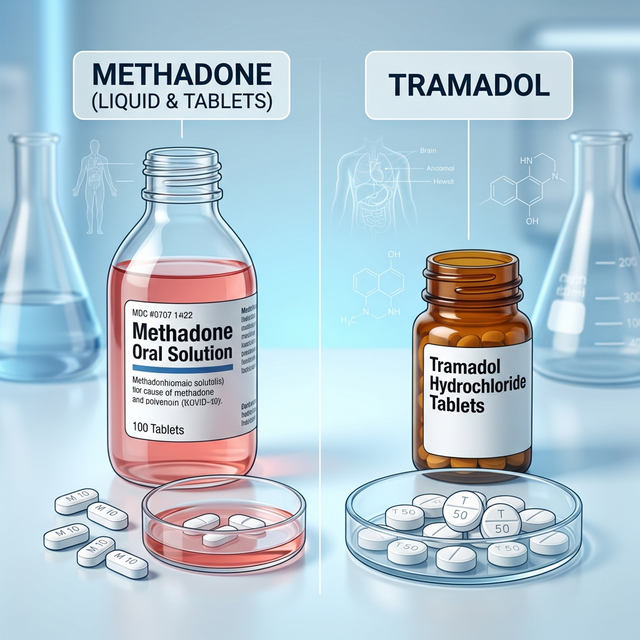
Tramadol (Ultram) and Morphine (MS Contin, Kadian) represent two fundamentally different tiers of American pain management. Morphine is the 'Gold Standard' natural opiate against which all other narcotics are measured in the United States. Tramadol is a synthetic 'dual-action' opioid designed for moderate pain, offering both opioid-receptor relief and a boost to brain chemicals like serotonin and norepinephrine.
In the USA, Morphine is the benchmark (1.0) on the Morphine Milligram Equivalent (MME) scale, while Tramadol is roughly 10 times weaker. This guide explores why U.S. surgeons choose Morphine for major trauma and cancer while utilizing Tramadol as a functional bridge for chronic conditions like fibromyalgia.

Dr. Kelsey Hopkins, MD
Dr. Hopkins practices rural family medicine in Southern Illinois, with a focus on community healthcare and chronic pain management.
Quick Reference Comparison
| Clinical Feature | Tramadol | Morphine |
|---|---|---|
| Drug Class | Synthetic Dual-Action Opioid | Natural Opiate (Phenanthrene) |
| DEA Schedule | Schedule IV (Lower Control) | Schedule II (Strict Control) |
| MME Potency | 0.1 (Low Potency) | 1.0 (Baseline) |
| Mechanism | Mu-Opioid + SNRI Action | Pure Mu-Opioid Agonist |
| Primary U.S. Use | Moderate Chronic Pain | Severe Acute / Cancer Pain |
What is Tramadol?
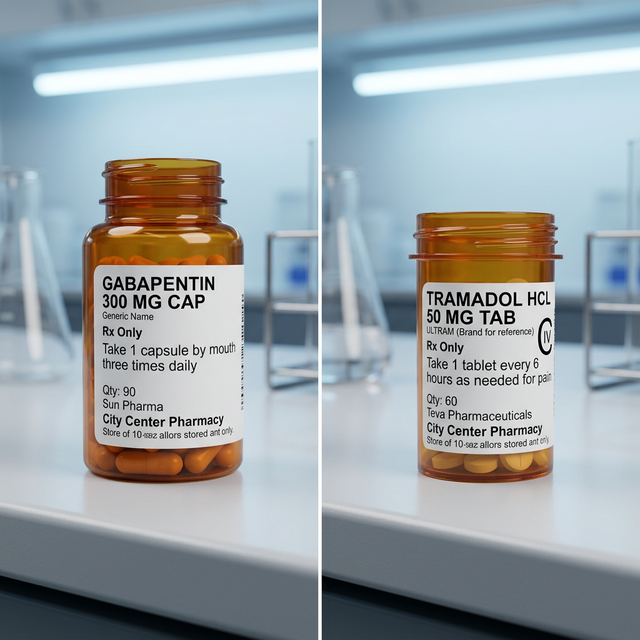
Tramadol is a modern synthetic opioid that changed the U.S. landscape in the 1990s. It operates through a dual-mechanism approach: binding weakly to mu-opioid receptors while simultaneously inhibiting the reuptake of serotonin and norepinephrine. In the USA, it is a favorite for chronic pain where 'functional relief' is the goal—allowing the patient to remain alert while managing background pain.
What is Morphine?
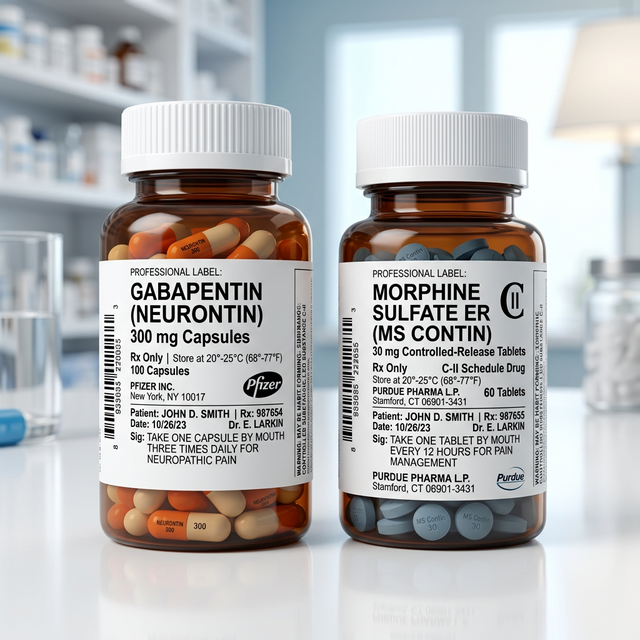
Morphine is a naturally occurring alkaloid derived from the opium poppy. In the United States, it is the standard by which all other analgesics are judged. It provides direct, powerful, and predictable relief by shutting down the brain's ability to process pain signals. It is primary for U.S. ER trauma, post-surgical recovery, and palliative care.
Mechanism of Action: How They Work
Morphine binds directly and powerfully to the mu-opioid receptors. Tramadol is a 'hybrid'; its pain relief comes from both its weak opioid binding and its 'antidepressant-like' effect on neurotransmitters. In U.S. clinical terms, Morphine is a 'heavy' narcotic focus, while Tramadol is a 'neuro-stabilizing' focus.
Combined Pathway Logic
Opioid Signal
Morphine acts 10x more strongly on receptors than Tramadol.
Chemical Boost
Tramadol increases Serotonin for nerve-pain synergy.
Baseline Power
Morphine doesn't need neurotransmitter boosts to stop pain.
FDA-Approved vs. Off-Label Uses
- Tramadol: FDA-Approved for pain. Frequently used in the USA for fibromyalgia and neuropathic pain.
- Morphine: FDA-Approved for severe chronic or acute pain. The gold standard for end-of-life care.
Potency and Clinical Strength
Morphine is the 'Ruler'. 1mg of oral Morphine = 1.0 MME. Tramadol is 0.1 MME. In U.S. clinical practice, taking 100mg of Tramadol provides the same opioid strength as 10mg of Morphine. However, the patient may 'feel' the side effects of 100mg of a drug quite differently than 10mg of another.
Bioavailability & Metabolism
Both are metabolized in the liver. Tramadol relies heavily on the CYP2D6 enzyme to be converted into its active 'M1' metabolite. If a U.S. patient lacks this enzyme (poor metabolizer), Tramadol will be useless. Morphine is active on its own but is subject to a 'First Pass' effect where the liver destroys much of it before it reaches the blood.
Half-Life & Duration of Action
Morphine half-life is around 2-3 hours. Tramadol is around 6-7 hours. This means Morphine wears off faster, often requiring more frequent dosing (especially in U.S. immediate-release forms) compared to Tramadol.
Clinical Efficacy and Indications
Morphine is superior for acute high-intensity trauma (broken bones, heart attacks). Tramadol is often better for 'Mixed' pain (chronic back pain with nerve involvement) because its serotonin action provides a second layer of defense.
Typical Dosage and Administration
Tramadol is limited by a **400mg daily ceiling** in the USA to prevent seizures. Morphine has no absolute ceiling for dose escalation in U.S. terminal care, though it is limited by respiratory safety in non-tolerant patients.
Side Effects and Adverse Reactions
Morphine is famous for 'The Itch' (histamine release) and severe constipation. Tramadol is more likely to cause nausea, sweating, and insomnia due to its SNRI effects.
Comprehensive Side Effect Analysis
| Side Effect | Tramadol | Morphine |
|---|---|---|
| Drowsiness | Moderate | Extreme |
| Constipation | Common | Very Severe |
| Seizure Risk | Significant | None |
| Itching (Histamine) | Low | Extremely High |
🔴 Tramadol Risks
- Nausea
- Sweating
- Dizziness
- Insomnia
🔴 Morphine Risks
- Pruritus (Itching)
- Somnolence
- Confusion
- Bowel Slower
⚠ Critical Safety Note
Serious adverse reactions require immediate medical attention. The following are life-threatening signs:
- Serotonin Syndrome (Tramadol)
- Grand Mal Seizures (Tramadol)
- Fatal Respiratory Depression (Morphine)
Safety, Addiction Risk, and Controlled Status
⚠ U.S. Regulation: Schedule II (Morphine) vs Schedule IV (Tramadol)
Morphine has a high potential for psychological euphoria, making it a major risk in the USA. Tramadol is lower-risk for 'getting high' but has a complex withdrawal that mimics both opioid and antidepressant cessation (brain zaps, anxiety).
- Morphine is the primary tool for hospice 'Air Hunger' in the USA.
- Tramadol must NEVER be mixed with antidepressants (SSRIs) due to Serotonin Syndrome.
- Both drugs cause 'Opioid Induced Constipation' (OIC).
Pharmacy Cost & U.S. Healthcare Access
Both are widely available as low-cost generics in the USA. Morphine (immediate release) and Tramadol are staples of $4-$15 generic lists at most American pharmacies.
Clinical Decision Flow: Which Should You Choose?
U.S. doctors balance 'Absolute Power' against 'Chemical Complexity'.
U.S. Analgesic Triage
Frequently Asked Questions
Yes. Oral Morphine is approximately 10 times more potent than oral Tramadol milligram-for-milligram.
Yes, specifically in the USA, doctors monitor for a lowered seizure threshold at doses above 400mg/day.
No. Mixing Tramadol with SSRI antidepressants can lead to Serotonin Syndrome, a life-threatening U.S. medical emergency.