Tramadol vs Oxycodone: Clinical Comparison, Potency & Side Effects
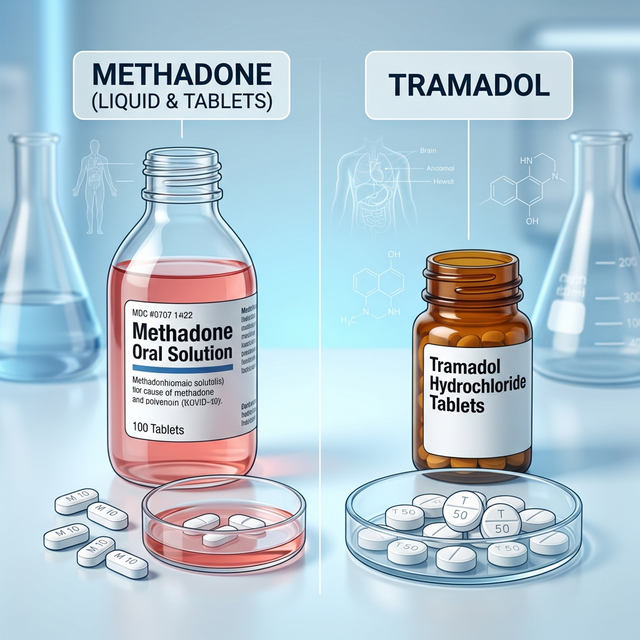
Tramadol (Ultram) and Oxycodone (Roxicodone, OxyContin) represent two vastly different tiers of the American opioid hierarchy. While both are used to treat moderate to severe pain in the United States, they operate through distinct biological pathways. Oxycodone is a pure, high-potency narcotic, whereas Tramadol is a 'dual-action' synthetic agent that affects both opioid receptors and brain chemicals like serotonin.
In the USA, the choice between these two is often dictated by the **DEA Schedule**. Oxycodone is a strictly regulated Schedule II drug with extreme addiction potential, while Tramadol is a Schedule IV drug, often considered 'lighter' but carrying its own unique risks like seizures. This guide explores the massive 15x potency gap and the clinical reasons a U.S. doctor might choose one over the other.

Dr. Kelsey Hopkins, MD
Dr. Hopkins practices rural family medicine in Southern Illinois, with a focus on community healthcare and chronic pain management.
Quick Reference Comparison
| Clinical Feature | Tramadol | Oxycodone |
|---|---|---|
| Drug Class | Synthetic Dual-Action Opioid | Semi-Synthetic Pure Opioid |
| DEA Schedule | Schedule IV (Lower Control) | Schedule II (Strict Control) |
| MME Potency | 0.1 (Low Potency) | 1.5 (High Potency) |
| Mechanism | Mu-Opioid + SNRI boost | Pure Mu-Opioid Agonist |
| Primary U.S. Use | Chronic Nerve/Moderate Pain | Severe Acute/Surgical Pain |
What is Tramadol?
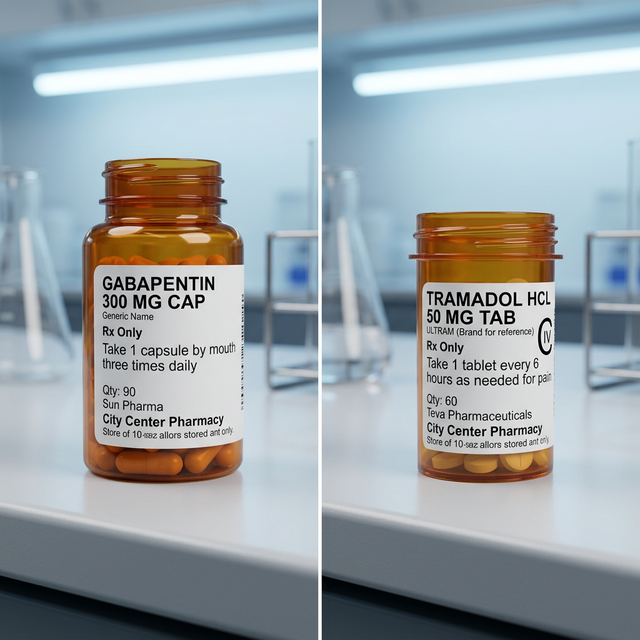
Tramadol is a unique 'atypical' opioid used extensively in U.S. primary care. It doesn't just block pain signals; it also prevents the reuptake of serotonin and norepinephrine, similar to how some American antidepressants work. This makes it particularly effective for chronic 'burning' or nerve pain that traditional narcotics can't always reach.
What is Oxycodone?
Oxycodone is the 'heavy hitter' of American outpatient pain management. Derived from the poppy plant, it is a pure narcotic designed for one thing: stopping intense physical pain. In the USA, it is often the first-line choice for recovery after major surgeries or traumatic injuries where lower-tier drugs like Tramadol are insufficient.
Mechanism of Action: How They Work
Oxycodone binds directly and intensely to the mu-opioid receptors in the brain, providing a 'hard' stop to pain. Tramadol binds much more weakly to those receptors but 'boosts' the body's internal pain-fighting neurotransmitters. This 'Hybrid' nature of Tramadol is why many U.S. patients find it more stimulating (and less sedating) than Oxycodone.
Receptor Fit & Chemical Signal
Opioid Signal
Oxycodone provides a much stronger 'numbing' effect.
Neurotransmitter Boost
Tramadol increases Serotonin/Norepinephrine levels.
Liver Activation
Tramadol MUST be processed by the liver to work; Oxy is active on its own.
FDA-Approved vs. Off-Label Uses
- Tramadol: FDA-Approved for pain severe enough to require an opioid. Often used off-label for fibromyalgia.
- Oxycodone: FDA-Approved for moderate-to-severe acute pain. Extended-release (OxyContin) for around-the-clock chronic pain.
Potency and Clinical Strength
The potency gap is massive. In the USA, doctors use the **MME (Morphine Milligram Equivalent)** scale. Oxycodone is 15 times stronger than Tramadol per milligram. Taking 10mg of Oxycodone is roughly equivalent to taking 150mg of Tramadol in terms of opioid impact.
Bioavailability & Metabolism
Tramadol is a 'prodrug', meaning it relies 100% on the liver's CYP2D6 enzyme to become active. Roughly 7% of Americans are 'poor metabolizers' and will feel NO relief from Tramadol. Oxycodone has a high (80%+) bioavailability and works reliably for almost all U.S. patients regardless of genetics.
Half-Life & Duration of Action
Oxycodone hits fast (peak in 1 hour) and wears off moderately (half-life 3.5 hours). Tramadol takes longer to ramp up (peak in 2 hours) but its active metabolites stay in the U.S. patient's system slightly longer (half-life 6-7 hours).
Clinical Efficacy and Indications
Tramadol is superior for chronic 'mixed' pain where there is a nerve component. Oxycodone is the gold standard for 'bone' and 'surgical' pain in the USA. Clinical studies show Oxycodone has a higher 'patient satisfaction' score for post-op recovery.
Typical Dosage and Administration
Tramadol is typically dosed at 50mg-100mg. Oxycodone is dosed much lower (5mg-15mg). **CRITICAL:** Tramadol has a daily dose ceiling of 400mg in the USA to prevent seizures; Oxycodone has no ceiling for effectiveness, only for safety/breathing.
Side Effects and Adverse Reactions
Oxycodone causes significant sedation and 'The Itch' (histamine release). Tramadol is more likely to cause nausea, sweating, and 'Brain Zaps' if stopped suddenly.
Comprehensive Side Effect Analysis
| Side Effect | Tramadol (0.1x) | Oxycodone (1.5x) |
|---|---|---|
| Dizziness | High | Moderate |
| Constipation | Common | Extreme |
| Seizure Risk | Significant | None |
| Itching | Rare | Very High |
🔴 Tramadol Risks
- Nausea
- Sweating
- Dizziness
- Dry Mouth
🔴 Oxycodone Risks
- Somnolence (Heavy Sleepiness)
- Constipation
- Pruritus (Itching)
- Respiratory Slowdown
⚠ Critical Safety Note
Serious adverse reactions require immediate medical attention. The following are life-threatening signs:
- Serotonin Syndrome (Tramadol)
- Fatal Respiratory Depression (Oxy)
- Grand Mal Seizures (Tramadol)
Safety, Addiction Risk, and Controlled Status
⚠ U.S. Regulation: Schedule II (Oxy) vs Schedule IV (Tramadol)
Oxycodone has a much higher potential for psychological addiction (euphoria) in the USA. While Tramadol is lower-risk for 'getting high', its withdrawal is notoriously difficult because it includes both opioid withdrawal and 'antidepressant' withdrawal symptoms like anxiety and tremors.
- Tramadol must NEVER be taken with SSRI antidepressants in the USA due to Serotonin Syndrome.
- Oxycodone carries a massive risk for respiratory arrest if combined with alcohol.
- Tramadol can cause seizures even at prescribed doses in some U.S. patients.
Pharmacy Cost & U.S. Healthcare Access
Both are widely available as low-cost generics in the USA. Tramadol is often slightly cheaper due to its lower DEA classification and fewer administrative hurdles for pharmacies.
Clinical Decision Flow: Which Should You Choose?
U.S. surgeons decide based on the 'Intensity' of the surgical outcome vs the 'Duration' of the recovery.
U.S. Opioid Triage Logic
Frequently Asked Questions
No. Clinically, 50mg of Tramadol is actually weaker than 5mg of Oxycodone on the MME scale used by U.S. doctors.
Because it interferes with brain chemistry beyond just the opioid system, lowering the 'threshold' for a seizure at high doses.
Oxycodone has a more intense 'craving', but Tramadol withdrawal often lasts longer because of the antidepressant-like effects resetting in the brain.