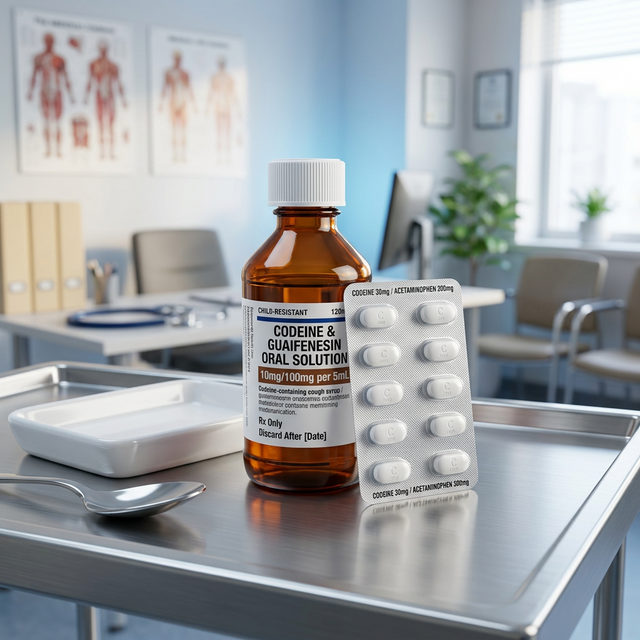

What is this medication
Codeine is a naturally occurring alkaloid found in the opium poppy. In American medicine, it is considered the "entry-level" narcotic. It is nearly 10 times weaker than pure morphine, making it a preferred choice for U.S. clinicians when non-opioid medications like Ibuprofen fail to control pain.
A unique feature of codeine in the United States is its dual role. It is one of the most powerful "antitussives" (cough suppressants) ever discovered. U.S. pulmonary specialists prescribe codeine syrups for "refractory cough"—coughing so severe it risks breaking ribs or preventing all sleep.
| Clinical Use | American Formulation |
|---|---|
| Mild/Moderate Pain | Tylenol with Codeine (No. 3 or No. 4) |
| Severe Dry Cough | Guaifenesin AC Syrup |
| Diarrhea Management | Historically utilized in U.S. clinics |
What is it used for
In the United States, codeine is almost always used as a "combination" medication rather than a pure pill.
- Dental Pain: The standard U.S. prescription after wisdom tooth extraction or complex root canals.
- Mild Post-Surgical Pain: Used for American patients recovering from minor outpatient procedures.
- Cough Suppression: A critical U.S. tool for managing the violent coughs associated with severe bronchitis or pneumonia.
- Orthopedic Bridge: Managing minor bone fractures while the U.S. patient transitions back to OTC meds.
How it works
Codeine is a "Prodrug." This means it does nothing until the American patient's liver "unlocks" it.
- The CYP2D6 Conversion: When ingested, only roughly 10% of the codeine binds to mu-opioid receptors. The remaining 90% is sent to the liver.
- Creating Morphine: The crucial enzyme CYP2D6 demethylates the codeine, converting a small percentage directly into pure morphine. It is this newly minted morphine that binds aggressively to the pain receptors in the brain and spinal cord, blocking the ascending transmission of pain signals.
- Genetic Variability: Approximately 7-10% of the Caucasian population lacks the functioning CYP2D6 enzyme entirely. These "poor metabolizers" experience zero pain relief from codeine, only side effects.
- Ultra-Rapid Metabolizers: Conversely, up to 2-3% of the U.S. population convert so much codeine into morphine so fast that even a normal dose can trigger a fatal overdose.
Dosage guide
Dosing in the USA is tied directly to the accompanying medication (usually Acetaminophen).
| U.S. Formulation | Codeine Content | Acetaminophen Content |
|---|---|---|
| Tylenol #2 | 15mg | 300mg |
| Tylenol #3 | 30mg | 300mg |
| Tylenol #4 | 60mg | 300mg |
Max Dose Check: Because of the Tylenol component, U.S. patients must ensure they do not exceed 4,000mg of Acetaminophen total per day.
Side effects
The "Standard Opioid" side effects are present but usually milder than with Oxycodone.
- Constipation: The #1 complaint among American codeine users.
- Nausea/Vomiting: Common if taken on an empty stomach in the USA.
- Itching (Pruritus): Codeine is a major histamine releaser, often causing the American patient to itch without a rash.
Warnings and precautions
Drug interactions
American patients must avoid "stacking" sedatives with codeine.
- CYP2D6 Inhibitors: Drugs like Prozac (Fluoxetine) or Paxil can block the liver from converting codeine to morphine, making the drug useless in the USA.
- Alcohol: Dramatically increases the risk of fatal respiratory failure in the American patient.
- Sleep Aids: Benadryl or Unisom massively compound the sedation and "nodding" effects.
Alternatives
If codeine is ineffective or causes too much itching in the USA:
- NSAIDs: 800mg of Ibuprofen is often clinically identical to codeine for dental pain.
- Hydrocodone: If codeine fails, Hydrocodone (Norco) is the next step up the U.S. pain ladder.
- Tramadol: A synthetic alternative often used in American clinics to avoid the heavy itching caused by natural opiates.
Cost in the United States
Codeine is one of the cheapest medications in the United States.
- Tylenol #3 Generic: Often costs less than $10 for a 30-tablet script at major U.S. pharmacies.
- Cough Syrup: Generic Promethazine/Codeine is usually a "Preferred" low-tier drug on U.S. insurance plans.
Availability in the US healthcare system
Codeine is highly regulated in the United States but widely stocked.
- Schedule II: Pure codeine (rarely used).
- Schedule III: Codeine combination tablets (Tylenol #3).
- Schedule V: Certain codeine cough syrups (varies by U.S. state law; some states require a prescription while others historically allowed OTC sales).
Comparison with other medications
| Feature | Codeine vs. Hydrocodone |
|---|---|
| Potency | Hydrocodone is roughly 6x more potent than Codeine in the American body. |
| Safety | Codeine has a "ceiling effect" for cough, but carries higher genetic risk than Hydrocodone in the USA. |
Safety guidance
To ensure safe use in the American home:
- Hydration: Drink at least 64oz of water daily to prevent severe opioid-induced constipation in the USA.
- Genetic Testing: If codeine does nothing for your pain, mention this to your U.S. doctor; you may be a "Poor Metabolizer."
Frequently Asked Questions
Why does codeine make me so itchy compared to other pills?
Can I take codeine if I'm allergic to Morphine in the USA?
Expert Verified Content
This clinical guide on Codeine has been reviewed for accuracy by the US Pain Meds Medical Review Board, adhering to current FDA, NIH, and CDC standards in the United States.
Clinical References & Authority Sources
- U.S. Food and Drug Administration (FDA). Drugs@FDA Database.
- National Institutes of Health (NIH). DailyMed Library.
- Centers for Disease Control and Prevention (CDC). Pain Management Guidelines.
- Drug Enforcement Administration (DEA). Controlled Substance Act Schedules.